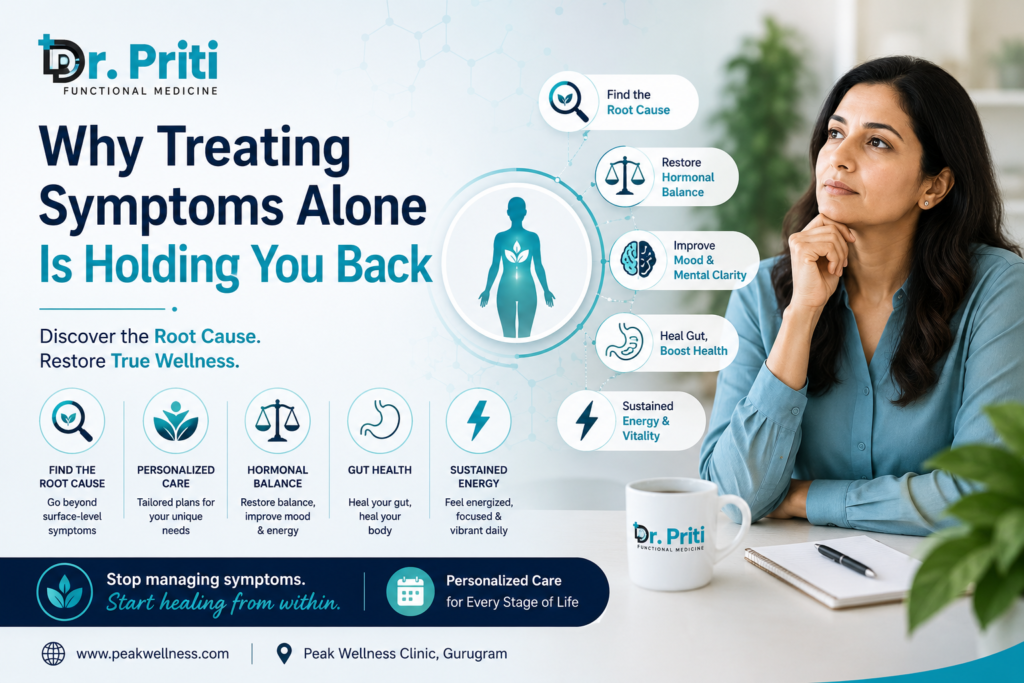
Have you ever noticed that the same health problem keeps coming back, even after taking medication?
You feel better for a few days or weeks, but then the symptoms return. Whether it’s digestive discomfort, constant fatigue, headaches, poor sleep, unexplained weight gain or low energy, many people find themselves stuck in a cycle of temporary relief rather than lasting wellness.
The reason may not be that your treatment isn’t working it could be because only the symptom is being addressed, while the underlying cause remains unchanged.
This is where a different perspective on healthcare becomes important.
Symptoms Are Signals, Not the Problem
Think of your body as a communication system.
When you experience bloating, tiredness, skin issues, mood changes or recurring headaches, your body is trying to tell you that something may be out of balance.
These symptoms are often warning signs rather than the actual problem.
For example:
- Poor sleep may be linked to stress or hormonal imbalance.
- Digestive discomfort may be connected to gut health.
- Constant fatigue may result from nutritional deficiencies or chronic inflammation.
- Weight gain may be influenced by hormones, metabolism or lifestyle habits.
Ignoring these signals or simply suppressing them may provide temporary comfort, but it rarely addresses why they developed in the first place.
Why Symptom Based Care Isn’t Always Enough
Modern healthcare has helped millions of people manage illnesses and improve their quality of life. However, in many chronic health conditions, symptom relief alone may not always provide long term improvement.
If the underlying trigger remains unchanged, symptoms can continue to return.
For example, taking medication for acidity may reduce discomfort, but if poor eating habits, stress or gut imbalance continue, the problem may persist.
Similarly, treating fatigue with supplements alone may not help if poor sleep, hormonal imbalance or nutritional deficiencies are the real contributors.
Looking Beyond the Symptoms
A root cause approach focuses on asking an important question:
“Why is this happening?”
Instead of concentrating only on the symptom, healthcare professionals look at factors that may be influencing your overall health, including:
- Nutrition
- Gut health
- Sleep quality
- Stress levels
- Hormonal balance
- Physical activity
- Lifestyle habits
Understanding how these areas work together often provides a clearer picture of long term wellness.
Many people searching for a functional medicine clinic gurgaon are looking for this more personalized and comprehensive approach.
The Importance of Connecting the Dots
The human body functions as one interconnected system.
For example, poor gut health may influence immunity, energy and even mood.
Chronic stress may affect digestion, hormones, sleep and metabolism.
Similarly, poor sleep can influence appetite, energy, weight management and mental clarity.
When these connections are overlooked, treatment may only focus on one symptom while several underlying factors remain unaddressed.
Looking at the complete picture often helps create a more sustainable wellness plan.
Lifestyle Plays a Bigger Role Than You Think
Small daily habits can have a significant impact on overall health.
Some of the most common lifestyle factors affecting wellness include:
- Processed foods
- Poor hydration
- Irregular meal timings
- Lack of movement
- Chronic stress
- Inadequate sleep
These habits don’t usually cause symptoms overnight.
Instead, they gradually influence how the body functions over months or even years.
Supporting healthier daily routines often becomes an important part of improving long term well being.
A Personalized Approach to Better Health
No two individuals experience health concerns in exactly the same way.
Two people with similar symptoms may have completely different underlying causes.
This is why personalized care has become increasingly important.
At Peak Wellness, health is viewed through a broader lens that considers lifestyle, nutrition, stress, sleep, metabolism, gut health and hormonal balance together.
Under the guidance of Dr. Priti Nanda, wellness plans are designed to understand the whole person rather than focusing on isolated symptoms.
Many individuals visiting a functional medicine clinic gurgaon appreciate this individualized approach because it helps create practical and sustainable health strategies.
Small Changes Can Lead to Long Term Results
Improving health does not always require dramatic changes.
Simple habits such as:
- Eating balanced meals
- Sleeping consistently
- Managing stress
- Staying physically active
- Supporting gut health
- Drinking enough water
can gradually contribute to better energy, digestion, mood and overall wellness.
The goal isn’t to chase quick fixes it’s to create lasting improvements that support your body’s natural ability to function well.
Final Thoughts
Symptoms are often the body’s way of asking for attention.
While temporary relief may be helpful, lasting wellness usually begins by understanding why those symptoms developed in the first place.
Looking beyond the obvious and addressing the factors that influence your overall health may help create a stronger foundation for long term well being.
If you’re ready to explore a more personalized approach to health, consult Dr. Priti Nanda at Peak Wellness to understand how a root cause strategy can support your wellness journey.
Website: https://www.peakwellness.in/
FAQ
1. What does treating the root cause mean?
It means identifying and addressing the underlying factors contributing to health concerns instead of focusing only on symptom relief.
2. What is functional medicine?
Functional medicine is a personalized healthcare approach that considers lifestyle, nutrition, gut health, hormones, stress and other factors that influence overall wellness.
3. Who can benefit from a root cause approach?
People experiencing chronic fatigue, digestive issues, hormonal concerns, weight management challenges, inflammation or recurring symptoms may benefit from a comprehensive evaluation.
4. Why do symptoms keep coming back?
Recurring symptoms may occur when the underlying cause has not been identified or addressed, even if temporary relief is achieved.
5. How does lifestyle affect long-term health?
Nutrition, sleep, stress, physical activity and hydration all influence how the body functions and may contribute to long term wellness.
6. Why is personalized healthcare important?
Every individual is unique, so understanding personal health history, lifestyle and contributing factors helps create more effective wellness strategies.
7. How can Peak Wellness help?
Peak Wellness, under the guidance of Dr. Priti Nanda, focuses on personalized, root cause-based wellness strategies that support long term health rather than only managing symptoms.