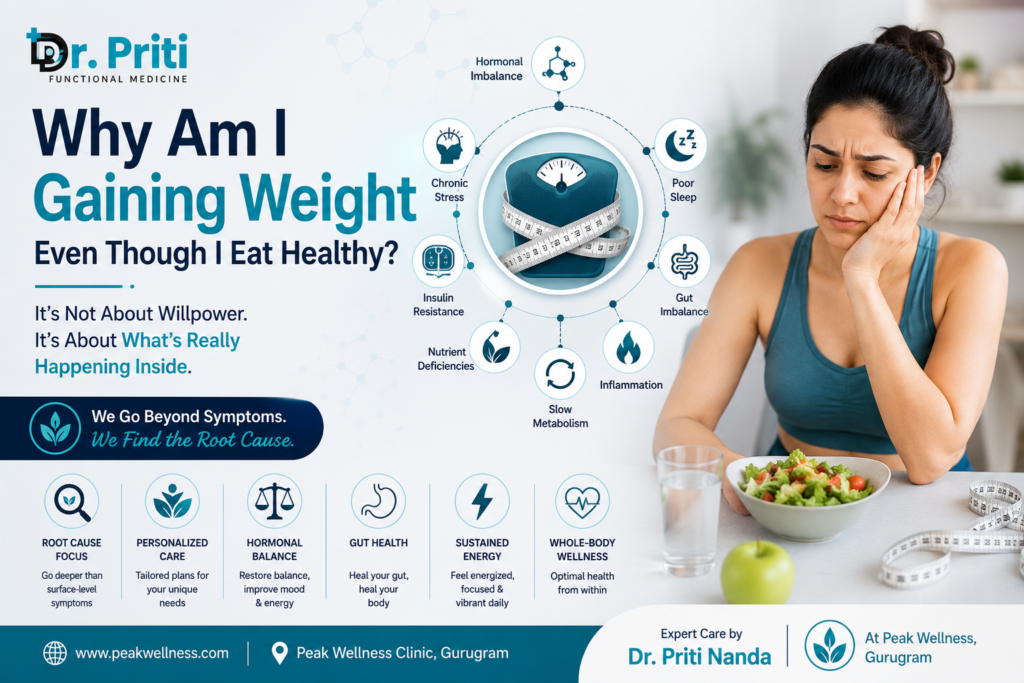
Many people feel frustrated when they eat nutritious meals, avoid junk food and still notice the number on the scale going up. It can be confusing to follow what seems like a healthy lifestyle yet continue to experience unwanted weight gain.
The truth is, healthy eating is only one part of the equation. Your body is influenced by hormones, metabolism, sleep, stress, gut health, physical activity and even how your body processes nutrients. If one or more of these areas are out of balance, gaining weight can become easier even when your diet appears healthy.
This is why understanding the root cause of weight gain is often more important than simply counting calories.
Healthy Food Doesn’t Always Mean Healthy Metabolism
Eating salads, fruits, or homemade meals is certainly beneficial, but it doesn’t always guarantee a healthy metabolism.
Your body may still struggle with:
- Hormonal imbalances
- Chronic stress
- Poor sleep quality
- Insulin resistance
- Gut health issues
- Nutrient deficiencies
These factors can affect how your body stores fat, burns calories, and regulates hunger.
Many people searching for answers to why am I gaining weight are surprised to learn that the issue often goes beyond food choices.
Hidden Reasons Behind Unexpected Weight Gain
1. Hormonal Imbalances
Hormones regulate appetite, metabolism and fat storage.
Changes in thyroid hormones, cortisol, insulin or reproductive hormones may make it more difficult for the body to maintain a healthy weight.
2. Poor Sleep Quality
Sleeping less than your body needs can influence hunger hormones and increase cravings throughout the day.
Poor sleep may also reduce energy, making regular physical activity more difficult.
3. Chronic Stress
Stress affects more than your mental health.
Long-term stress may increase cortisol levels, which can influence appetite, emotional eating and abdominal fat storage.
Sometimes, managing stress becomes just as important as improving diet.
4. Gut Health Matters
Your digestive system plays a much bigger role than many people realize.
An unhealthy gut may affect:
- Digestion
- Nutrient absorption
- Inflammation
- Metabolism
- Energy levels
Supporting gut health can be an important step in a sustainable weight loss journey.
5. Eating Healthy But Eating Too Much
Even nutritious foods contain calories.
Healthy snacks like nuts, smoothies, dried fruits and natural sweeteners can become calorie dense when consumed in large portions.
Portion awareness remains important, even with healthy foods.
6. Lack of Strength Training
Many people focus only on walking or cardio.
Building muscle through strength training helps improve metabolism and supports long term fat management.
Muscle tissue burns more energy than fat, even while your body is at rest.
Why Quick Diets Often Don’t Work
Crash diets may produce temporary weight changes, but they rarely address why the body gained weight in the first place.
Extreme calorie restriction can sometimes:
- Slow metabolism
- Increase fatigue
- Trigger cravings
- Lead to muscle loss
- Make weight regain more likely
Long term wellness usually comes from sustainable lifestyle changes rather than temporary dieting.
Looking Beyond the Scale
Your weight is only one measure of health.
Other important indicators include:
- Energy levels
- Sleep quality
- Digestive health
- Muscle mass
- Stress levels
- Hormonal balance
- Overall well being
Instead of asking only, “How can I lose weight?” it may be more helpful to ask, “Why is my body holding onto weight?”
That question often leads to better long term answers.
A Personalized Approach to Weight Management
Every person’s body is different.
Two people eating similar meals may experience completely different results because their metabolism, hormones, genetics, lifestyle and stress levels are not the same.
At Peak Wellness, weight management is approached by understanding the factors that may be influencing overall health rather than focusing only on calorie reduction.
Under the guidance of Dr. Priti Nanda, personalized wellness plans consider nutrition, lifestyle, hormonal health, metabolism, sleep and gut health together to help support long term wellness.
Simple Lifestyle Changes That Can Make a Difference
Improving overall health often begins with small, consistent habits:
- Eat balanced meals with adequate protein.
- Stay physically active throughout the week.
- Prioritize quality sleep.
- Manage daily stress effectively.
- Stay hydrated.
- Support digestive health.
- Avoid extreme dieting.
These habits may seem simple, but they often have a meaningful impact when practiced consistently.
Final Thoughts
If you’re wondering why am I gaining weight despite eating healthy, remember that food is only one part of the picture. Hormones, sleep, stress, gut health, metabolism and lifestyle all work together to influence your body’s ability to maintain a healthy weight.
Instead of chasing quick fixes, focus on understanding what your body is trying to tell you. A personalized, root cause approach can provide better insights and support long term weight loss goals while improving your overall well being.
For personalized guidance, consult Dr. Priti Nanda at Peak Wellness.
Website: https://www.peakwellness.in/
FAQs
1. Why am I gaining weight even though I eat healthy?
Weight gain may be influenced by hormones, stress, sleep, metabolism, gut health, activity levels and portion sizes not just food quality.
2. Can hormonal imbalance cause weight gain?
Yes. Hormonal changes can affect metabolism, appetite and how the body stores fat.
3. Does poor sleep affect body weight?
Yes. Poor sleep can disrupt hunger hormones, increase cravings and reduce energy for physical activity.
4. Can gut health influence weight?
A healthy gut supports digestion, nutrient absorption and metabolism, all of which may influence body weight.
5. Why don’t crash diets work long term?
Crash diets often fail because they don’t address the underlying causes of weight gain and may slow metabolism over time.
6. How can functional medicine help with weight management?
A root-cause approach looks beyond calories by evaluating factors such as hormones, nutrition, gut health, stress, sleep and lifestyle.
7. When should I seek professional help for weight gain?
If you’re gaining weight despite maintaining healthy habits, consulting a qualified healthcare professional can help identify underlying factors and create a personalized wellness plan.