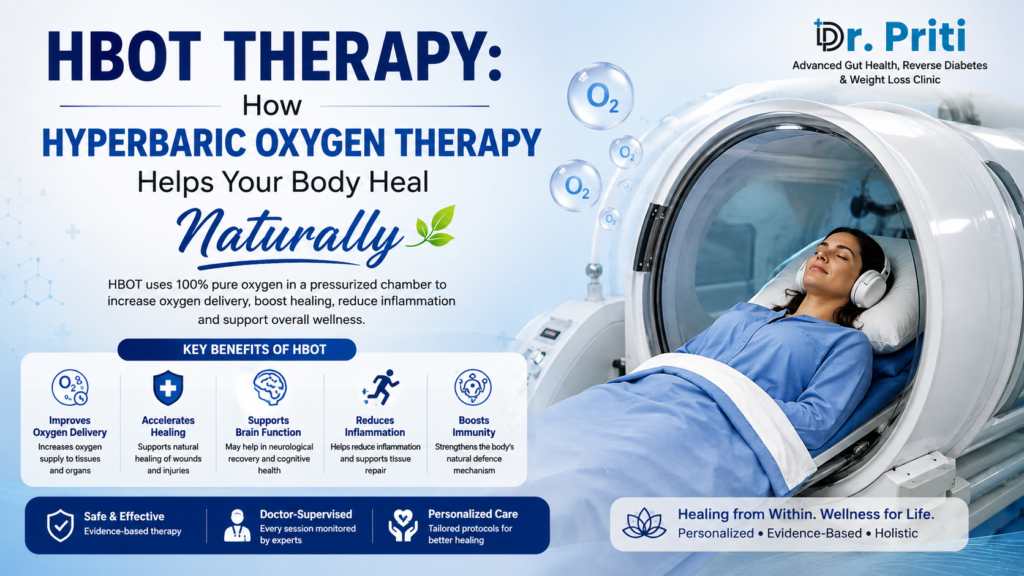
Have you ever wondered why the body sometimes takes longer to recover from an injury, wound, illness, or prolonged inflammation? Could giving your tissues more oxygen actually support the body’s natural healing process? Hyperbaric Oxygen Therapy in Gurugram is an advanced therapy that uses pure oxygen inside a pressurised chamber to increase oxygen availability to tissues and support the body’s natural repair mechanisms.
But how does HBOT actually work? Who can benefit from it? Is it safe? And why is medical supervision important when choosing an HBOT centre?
At Peak Wellness HBOT is approached as more than simply breathing oxygen. Under the supervision of Dr. Priti Nanda Sibal the therapy is incorporated into a personalised functional medicine approach based on an individual’s health condition, medical history, biomarkers, and wellness goals.
What Is HBOT Therapy and How Does It Work?
So what happens inside the body during an HBOT session?
Hyperbaric Oxygen Therapy commonly known as HBOT involves breathing highly concentrated oxygen inside a specially designed chamber where atmospheric pressure is carefully increased. This allows oxygen to dissolve more effectively into the blood plasma and body fluids, helping it reach tissues where oxygen delivery may be reduced.
Why is oxygen so important for healing?
Every cell in the body depends on oxygen for energy production and normal functioning. Oxygen also plays an important role in tissue repair, collagen formation immune responses and the development of new blood vessels.
By increasing oxygen availability, HBOT can create a supportive environment for the body’s natural healing processes. However, HBOT is not a universal cure. Whether it is appropriate depends on the person’s condition and should be determined following proper medical assessment.
Could HBOT Support Natural Healing?
Can increasing oxygen availability really make a difference to recovery?
The body has its own sophisticated repair system, but healing can sometimes be affected by poor circulation, tissue damage, inflammation, metabolic problems, or inadequate oxygen delivery. In such situations, improving tissue oxygenation may support several processes involved in recovery.
HBOT may help support:
- Tissue oxygenation
- Wound healing
- Blood circulation
- Tissue repair
- Collagen production
- Recovery following certain injuries
- Selected rehabilitation programmes
- Management of certain inflammation-related concerns
At Peak Wellness, the approach begins with understanding the individual rather than simply prescribing a fixed number of sessions. Every HBOT candidate undergoes a medical assessment before treatment so that suitability and an appropriate treatment plan can be considered.
Can HBOT Help With Difficult-to-Heal Wounds?
Why do some wounds continue for weeks or months despite conventional care?
Wound healing requires adequate oxygen. Oxygen contributes to collagen synthesis immune defence, tissue repair and the formation of new blood vessels. When circulation is compromised the healing environment can become less favourable.
This is one reason HBOT may be considered as supportive treatment for selected difficult-to-heal wounds including certain diabetic wounds.
Peak Wellness specifically includes diabetic wound healing among its HBOT applications. The clinic’s approach combines HBOT with appropriate nutritional and functional medicine support when clinically indicated rather than treating the therapy as a replacement for essential wound care or medical management.
This distinction matters. HBOT should complement appropriate treatment not replace infection management, wound care, blood-sugar management medication nutrition or other care recommended by a qualified medical professional.
Could HBOT Support Recovery After Injury or Surgery?
Have you noticed that recovery can sometimes continue long after the initial injury has healed?
The healing process does not stop when a wound closes. The body continues repairing tissues, rebuilding strength and adapting to physical stress.
Because oxygen is involved in tissue repair increased oxygen availability may support recovery in selected situations. Peak Wellness describes HBOT as part of its approach to injury recovery, surgery recovery chronic pain inflammation and rehabilitation.
The expected response, however, can vary considerably between individuals. Age, overall health, nutrition circulation, metabolic health, the underlying condition, and treatment adherence can all influence recovery.
Can HBOT Help With Inflammation?
Could oxygen therapy have a role in supporting the body’s response to inflammation?
Inflammation is a normal part of the body’s defence and healing response. Problems can arise when inflammatory processes persist for too long or become associated with chronic health concerns.
HBOT may influence several biological processes involved in tissue repair and inflammatory responses. Peak Wellness incorporates HBOT into personalised protocols for patients whose overall health assessment suggests that the therapy may be appropriate.
This is where functional medicine can provide a broader perspective. Instead of focusing only on inflammation as an isolated symptom, the treatment plan can also consider nutrition, lifestyle, metabolic health gut health, stress, and other factors that may influence overall wellbeing.
Could HBOT Support Brain and Neurological Recovery?
Can increased oxygen availability support tissues that have experienced neurological stress or injury?
The brain has a high metabolic demand for oxygen, which makes adequate oxygen delivery important for neurological function. HBOT has been used and investigated in selected neurological and rehabilitation settings.
Peak Wellness lists stroke and neuro-rehabilitation among the areas in which HBOT may provide supportive benefits. The clinic also considers concerns such as brain fog, migraines, post-COVID recovery and concussion recovery within its broader HBOT applications.
However, neurological conditions are complex. HBOT should therefore be considered as part of an appropriately evaluated treatment plan rather than as a guaranteed solution for every neurological problem.
Is HBOT Useful for Diabetes and Metabolic Health?
Could improving oxygen availability be relevant for people dealing with metabolic challenges?
Diabetes can affect circulation and wound healing, particularly when blood vessels and tissues are compromised. In selected situations, HBOT may be considered to support the healing of difficult diabetic wounds.
At Peak Wellness the functional medicine model also looks at the wider metabolic picture. Nutrition, lifestyle, blood-sugar regulation, inflammation, and other health factors may be considered alongside HBOT when developing an individualised plan.
This broader approach reflects an important principle of functional medicine: treating the person rather than looking at one symptom in isolation.
Hyperbaric Oxygen Therapy in Gurugram: Why Choose Peak Wellness?
If you are considering HBOT shouldn’t the medical expertise behind the treatment matter as much as the chamber itself?
At Peak Wellness HBOT sessions are physician-led and personally planned and monitored by Dr. Priti Nanda Sibal a GMC Amritsar graduate and ABAARM-certified physician with more than 30 years of clinical experience. Her approach combines HBOT with functional medicine principles to create personalised treatment protocols rather than offering the same programme to every patient.
The clinic uses an FDA-standard monoplace HBOT chamber from Oxycea Hyperbaric Chambers and describes its treatment process as physician-supervised, with assessment before the first session and monitoring throughout the treatment journey.
What does this mean for a patient?
It means the focus is not simply on spending time inside a chamber. The objective is to understand why the person is seeking HBOT assess whether the therapy is appropriate, and determine how it may fit into a wider health plan.
Peak Wellness also integrates HBOT with functional medicine strategies such as nutritional support lifestyle medicine and other therapies when clinically appropriate.
What Makes a Personalised HBOT Approach Different?
Would the same HBOT protocol work equally well for every person?
Not necessarily.
A person’s medical history, current condition, treatment objectives, and overall health can influence how HBOT is planned. This is why Peak Wellness follows a medical assessment before beginning treatment and develops a personalised protocol according to individual requirements.
Dr. Priti Nanda Sibal’s extensive clinical experience is particularly relevant here because HBOT is considered within a broader functional medicine framework. Rather than treating oxygen therapy as a standalone procedure, the clinic evaluates how it can fit into the person’s overall health strategy.
This patient-specific approach also helps set realistic expectations. Some people may be looking for support with recovery, while others may have a specific clinical concern requiring a more structured therapeutic plan.
What Happens During an HBOT Session?
Is an HBOT session complicated or uncomfortable?
Generally, the patient enters a monoplace hyperbaric chamber and breathes oxygen while the pressure is gradually adjusted. Peak Wellness describes typical sessions as lasting approximately 60–90 minutes, although the exact treatment plan can vary according to the individual’s needs.
During pressure changes, some people may notice a sensation of fullness or pressure in the ears, similar to what happens during an airplane flight. Patients are monitored throughout the session.
Before treatment, it is important to tell the treating medical team about your health history, medications, existing conditions, and any concerns you may have.
Is HBOT Safe for Everyone?
Is more oxygen automatically better for the body?
No. HBOT is a medical therapy, and suitability should be determined individually.
Although many people tolerate HBOT well, pressure changes and exposure to high concentrations of oxygen can have risks. Ear or sinus discomfort is one possible issue, while certain medical conditions may require additional precautions or may make HBOT unsuitable.
This is why choosing a medically supervised facility is important. At Peak Wellness, patients undergo an assessment before their first session, and treatment is planned and monitored under physician supervision.
The better question is not simply, “Is HBOT safe?” but “Is HBOT appropriate for my health condition, and is it being delivered safely under qualified medical supervision?”
How Many HBOT Sessions Might You Need?
Is one session enough, or does healing require a complete course?
There is no single answer because treatment requirements vary according to the individual’s condition and goals.
Peak Wellness states that session plans can vary, with 10 sessions commonly used as a starting point for general wellness and performance, while medical or therapeutic conditions may require a longer course. The final recommendation is made after assessment.
Rather than choosing a number of sessions based solely on someone else’s experience, patients should discuss their condition and objectives with the treating physician.
Can HBOT Be Combined With Functional Medicine?
Could combining appropriate therapies create a more complete approach to recovery?
At Peak Wellness, HBOT is integrated into a functional medicine model when appropriate. Nutritional support, lifestyle medicine, IV nutritional therapy, ozone therapy, infrared sauna therapy, and other interventions may be considered depending on the patient’s individual needs.
However, more treatments do not automatically mean better treatment. Each therapy should have a clear purpose and should be selected according to the person’s health status and treatment goals.
This personalised approach is one of the important aspects of Peak Wellness’s clinical philosophy.
Why Does Medical Experience Matter in HBOT?
When choosing an advanced therapy, shouldn’t the person supervising the treatment be as important as the technology?
HBOT requires more than operating a chamber. Appropriate patient selection, understanding medical history, recognising contraindications, planning treatment, monitoring the patient, and adjusting the approach when necessary all contribute to responsible care.
At Peak Wellness, Dr. Priti Nanda Sibal brings more than three decades of clinical experience to the treatment process. Her functional medicine background allows HBOT to be considered within a broader view of nutrition, lifestyle, metabolic health, inflammation, and individual patient needs.
This combination of clinical experience and personalised assessment helps ensure that HBOT is considered as part of a patient’s overall health journey rather than marketed as a one-size-fits-all solution.
Final Thoughts: Could HBOT Support Your Body’s Natural Healing?
So, can oxygen really help the body heal?
HBOT provides a controlled way of increasing oxygen availability to tissues and may support several biological processes involved in healing and recovery. Its potential applications include selected wound-healing concerns, recovery, rehabilitation, inflammation-related conditions, and other clinically appropriate situations.
At Peak Wellness, the emphasis is on personalised assessment, physician supervision, appropriate equipment, and functional medicine integration. The goal is not to promise the same outcome for everyone, but to understand each patient’s health needs and determine whether HBOT has a meaningful role in their treatment plan.
If you are considering HBOT, perhaps the most important question is not simply, “How quickly will it work?” Instead, ask: “Why could HBOT be appropriate for my condition, and how should it be safely integrated into my overall health plan?”
FAQ’S
1. What is HBOT?
HBOT delivers oxygen under increased atmospheric pressure.
2. Is HBOT safe?
HBOT is generally well-tolerated when medically supervised.
3. How long is an HBOT session?
Sessions typically last around 60–90 minutes.
4. How many sessions are needed?
Treatment plans vary according to individual needs.
5. Who should consider HBOT?
Suitability depends on your condition and medical assessment.