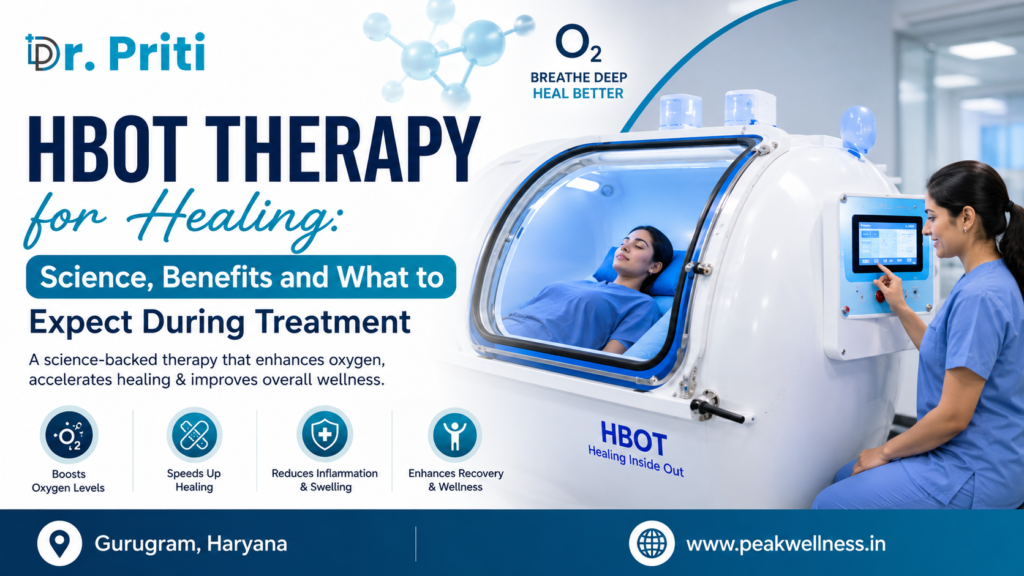
Have you ever wondered why some wounds heal quickly while others take much longer? Could increasing oxygen delivery to the body’s tissues support the natural healing process? Hyperbaric Oxygen Therapy in Gurugram is an advanced therapy that uses oxygen under controlled pressure to increase oxygen availability in the body. But how does it work, who may benefit, and what can you actually expect during treatment?
At Peak Wellness, HBOT is approached as part of a personalised functional medicine programme rather than as a standalone therapy. The clinic focuses on understanding an individual’s health history, lifestyle, nutrition, symptoms and underlying factors before developing a personalised treatment approach.
What Is HBOT Therapy?
So, what exactly happens during HBOT?
Hyperbaric Oxygen Therapy involves breathing a high concentration of oxygen inside a specially designed chamber while the surrounding pressure is increased above normal atmospheric pressure.
Under increased pressure, more oxygen can dissolve into the blood plasma and body fluids. This allows oxygen to reach tissues more effectively, particularly in situations where normal oxygen delivery may be limited.
But does more oxygen automatically mean faster healing?
Not necessarily.
HBOT is a specialised medical therapy with established applications for certain conditions. Its suitability depends on the individual’s medical history, diagnosis, treatment goals and overall health.
That is why proper assessment should always come before starting a course of treatment.
How Does HBOT Support Healing?
Why is oxygen so important for recovery?
Every cell in the body requires oxygen for normal energy production and functioning. Oxygen also contributes to several processes involved in tissue repair, including collagen formation, immune responses and the development of new blood vessels.
During HBOT, increased pressure allows oxygen to reach tissues in higher concentrations than it normally would through breathing air at standard atmospheric pressure.
This increased oxygen availability may help support:
- Tissue repair
- Oxygenation of compromised tissues
- Wound-healing processes
- Collagen production
- Formation of new blood vessels
- Selected rehabilitation and recovery programmes
However, healing depends on much more than oxygen alone. Nutrition, circulation, blood-sugar control, sleep, inflammation, physical rehabilitation and the underlying condition can all influence recovery.
Can HBOT Help Difficult-to-Heal Wounds?
Why do some wounds remain open despite regular treatment?
Some wounds can be difficult to heal when oxygen delivery and circulation are impaired. This can occur in selected patients with diabetes and other medical conditions.
For certain difficult-to-heal wounds, HBOT may be considered alongside conventional wound care. Increasing oxygen availability may provide additional support to the biological processes involved in tissue repair.
But should HBOT replace standard wound treatment?
No.
Wound cleaning, infection management, appropriate medication, blood-sugar control and other recommended medical treatments remain essential. HBOT should be considered an adjunct when clinically appropriate.
Could HBOT Support Recovery After Injury?
What happens to the body after an injury?
The body naturally responds through inflammation, repair and tissue remodelling. Oxygen plays an important role throughout these processes.
In selected situations, HBOT may provide additional oxygen support during recovery. However, outcomes vary according to the type and severity of injury, circulation, nutrition, age, metabolic health and rehabilitation.
This is where personalised treatment becomes particularly important.
At Peak Wellness, the functional medicine approach looks beyond one symptom and considers the broader factors that may influence an individual’s recovery.
What Are the Potential Benefits of HBOT?
Could one therapy support several aspects of healing?
Depending on the medical indication, potential benefits of HBOT may include:
1. Increased Tissue Oxygenation
The primary physiological effect of HBOT is increased oxygen availability to tissues.
2. Support for Wound Healing
HBOT may be used as an additional therapy for selected difficult-to-heal wounds.
3. Support for Tissue Repair
Oxygen is required for several cellular mechanisms involved in repairing damaged tissue.
4. Support During Rehabilitation
In selected medical situations, HBOT may be incorporated into a broader rehabilitation programme.
5. Support for Recovery
When clinically appropriate, increased tissue oxygenation may provide additional physiological support during recovery.
It is important to remember that potential benefits depend on the reason for treatment. HBOT should not be presented as a universal cure for chronic disease.
Why Does Personalised HBOT Matter?
Would the same HBOT protocol be appropriate for every patient?
Probably not.
Consider two people seeking HBOT. One may be recovering from an injury, while another may have a difficult-to-heal wound. Their medical histories, medications, nutritional status and treatment goals may be completely different.
A personalised assessment helps determine whether HBOT is appropriate and how it should fit into the overall treatment plan.
At Peak Wellness, the patient journey is built around understanding the individual first. The clinic’s functional medicine approach considers factors such as nutrition, gut health, hormones, inflammation, stress, sleep and metabolic health.
This broader perspective is particularly relevant when recovery involves multiple contributing factors.
Hyperbaric Oxygen Therapy in Gurugram: Why Choose Peak Wellness?
If you are considering HBOT, shouldn’t the expertise behind the treatment matter as much as the technology?
Peak Wellness follows a physician-led and personalised approach to advanced therapies. Dr. Priti Nanda Sibal is a GMC Amritsar graduate and ABAARM-certified physician with more than 35 years of clinical experience. According to Peak Wellness, she has helped more than 4,980 patients and has undertaken functional medicine training through George Washington University/A4M.
Her approach to healthcare has also been influenced by her own health journey. Peak Wellness explains that after being diagnosed with Type 2 diabetes in 2015, Dr. Priti pursued further functional medicine education and developed the BENDS approach.
The BENDS framework focuses on:
- Biome Restoration
- Endocrine Balancing
- Nutritional Precision
- De-inflammation
- Stress & Sleep
This philosophy reflects the clinic’s emphasis on looking for factors that may contribute to health problems rather than concentrating only on symptoms.
What Can Patients Expect at Peak Wellness?
Is HBOT simply about entering a chamber and breathing oxygen?
At Peak Wellness, the process begins with assessment. The clinic’s broader patient journey includes understanding health history, evaluating relevant factors and developing a personalised protocol.
The clinic describes its HBOT programme as physician-supervised and uses a monoplace HBOT chamber. Sessions are planned according to individual needs rather than applying exactly the same approach to every person.
HBOT may also be considered alongside other therapies offered at Peak Wellness when clinically appropriate. These include nutritional support, IV nutritional therapy, ozone therapy, infrared sauna therapy and other functional medicine interventions.
The objective is not to provide more treatments simply for the sake of adding treatments. Instead, the focus is on identifying which approaches may be appropriate for the individual.
What Happens During an HBOT Session?
Are you nervous about your first session?
Knowing what to expect can make the experience easier.
Step 1: Medical Assessment
Before treatment, the healthcare team reviews your health history and determines whether HBOT is appropriate.
Step 2: Entering the Chamber
You enter the hyperbaric chamber and get comfortable before the treatment begins.
Step 3: Pressure Increases
The pressure gradually increases. During this stage, you may notice fullness or pressure in your ears, similar to the sensation experienced during an airplane flight.
Step 4: Oxygen Treatment
Once the required pressure is reached, you breathe the prescribed oxygen for the duration of the session.
Step 5: Pressure Returns to Normal
At the end, the pressure is gradually reduced before you leave the chamber.
Peak Wellness states that HBOT sessions typically last around 60–90 minutes, although the exact duration can vary according to the treatment plan.
How Many HBOT Sessions Might Be Needed?
Is one session enough to experience meaningful results?
There is no universal answer.
The number of sessions depends on the reason for treatment, the individual’s health status and the clinical objectives. Some conditions may require a structured course of treatment, while other programmes may follow a different schedule.
Rather than deciding the number of sessions based on another person’s experience, discuss the expected treatment duration and goals with your healthcare provider.
Is HBOT Safe?
Is HBOT completely risk-free?
No medical therapy should be described as completely risk-free.
Some patients may experience temporary ear or sinus discomfort, pressure-related problems or temporary vision changes. Rare but more serious complications can also occur.
People with certain medical conditions may require additional assessment before treatment. Patients should always disclose their medical history and current medications to the treating healthcare professional.
Safety also depends on appropriate equipment, trained staff, screening and medical supervision.
This makes the quality of clinical supervision an important consideration when choosing an HBOT facility.
Can HBOT Be Combined With Functional Medicine?
Could healing require more than one approach?
In many situations, recovery is influenced by several factors. Poor nutrition, inadequate sleep, metabolic imbalance, chronic stress or inflammation may affect how the body responds to injury or illness.
Peak Wellness uses a functional medicine approach that considers these wider factors. HBOT may therefore be incorporated into a personalised health programme when appropriate rather than being treated as the only intervention.
This is particularly consistent with the clinic’s philosophy of addressing the individual’s overall health and identifying potential root contributors.
What Should You Ask Before Starting HBOT?
Before beginning treatment, wouldn’t it be useful to know exactly why it has been recommended?
Consider asking your healthcare provider:
- What is the specific goal of HBOT?
- Is HBOT appropriate for my condition?
- How many sessions might I require?
- What results are realistically expected?
- What risks apply to me?
- How will my progress be monitored?
- Can HBOT be combined with my existing treatment?
These questions can help you make an informed decision instead of relying only on general claims about oxygen therapy.
Final Thoughts
So, is HBOT worth considering for healing?
For appropriately selected patients, HBOT can provide a controlled way to increase oxygen availability to tissues and may support certain healing and recovery processes. However, it is not a universal cure and should not replace necessary medical treatment.
The most important factor is choosing the right therapy for the right patient under appropriate medical supervision.
At Peak Wellness, the focus is on personalised assessment, physician supervision and functional medicine principles. Dr. Priti Nanda Sibal’s extensive clinical experience and the clinic’s personalised approach provide a framework for considering HBOT as one component of a broader health and recovery plan.
If you are considering HBOT, the best starting point is not simply asking, “Will this work?” Instead, ask, Is this appropriate for my condition, and how can it safely fit into my overall treatment plan?
FAQs
1. What is HBOT therapy used for?
HBOT supports selected conditions where increased tissue oxygenation may help healing.
2. How long does an HBOT session last?
A typical session may last approximately 60–90 minutes, depending on treatment needs.
3. Can HBOT support wound healing?
HBOT may support selected difficult-to-heal wounds alongside standard medical care.
4. Is HBOT uncomfortable during treatment?
Temporary ear pressure may occur, especially while chamber pressure changes.
5. Who should consider HBOT therapy?
Suitability depends on medical history, diagnosis, goals and professional assessment.