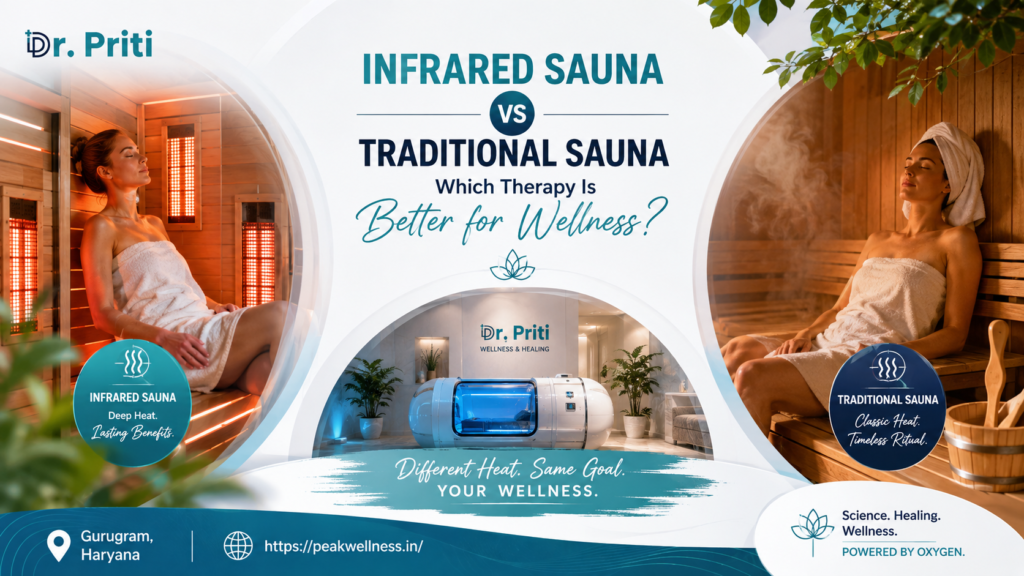
Have you ever wondered why some people love the intense heat of a traditional sauna while others prefer the gentler warmth of an infrared sauna? Infrared Sauna Therapy in Gurugram is gaining attention among people looking for a comfortable way to support relaxation, recovery and overall wellness. But does infrared heat really offer something different from a conventional sauna?
The answer starts with understanding how each therapy works.
Traditional Sauna: The Classic Heat Experience
A traditional sauna heats the air inside the room. As the surrounding temperature rises, your body gradually becomes warmer and responds by increasing blood flow to the skin and producing sweat.
For many people, this strong heat is the main attraction. It creates that familiar sauna experience of sitting in a hot environment, relaxing and sweating before gradually cooling down.
Traditional saunas can be enjoyable if you are comfortable with high temperatures. However, some people find the intense heat difficult to tolerate, particularly when they are new to sauna therapy.
That is where infrared technology offers a different experience.
How Does an Infrared Sauna Work?
An infrared sauna uses infrared wavelengths to warm the body more directly rather than relying primarily on extremely hot surrounding air.
Peak Wellness uses near, mid and far infrared wavelengths, with its infrared sauna sessions generally operating between 110°F and 140°F. The clinic describes the experience as gentler than a traditional sauna while providing a deep-heating wellness experience.
The lower ambient temperature can make infrared therapy feel more comfortable for people who dislike the intense heat of conventional saunas.
Instead of immediately feeling surrounded by extremely hot air, the warmth develops more gradually.
For many users, this makes it easier to relax during the session.
Is Infrared Actually Better Than Traditional Sauna?
There isn’t one answer that applies to everyone.
If you enjoy high temperatures and the classic sauna atmosphere, a traditional sauna may be perfectly suitable.
If you prefer a more controlled and gradual heat experience, infrared may be more appealing.
The important thing is not simply choosing the newest technology. It is understanding what you want from sauna therapy.
Are you looking for relaxation?
Muscle recovery?
A comfortable sweating experience?
A wellness routine that you can maintain consistently?
Your answer to these questions can help determine which option makes more sense.
What Happens to Your Body During Sauna Therapy?
Regardless of the type of sauna, heat causes your body to work harder to regulate its temperature.
As your body becomes warmer, blood vessels near the skin widen and sweating increases. Your heart rate can also rise as your body responds to the heat.
This is one reason sauna sessions can feel physically different from simply sitting in a normal room.
At Peak Wellness, an infrared session typically lasts around 30–45 minutes, with the temperature and duration adjusted according to the person’s comfort and health goals. The clinic also provides hydration support and a private sauna pod rather than a shared environment.
That personalised experience can make a difference, especially for someone trying sauna therapy for the first time.
Which Sauna Is More Comfortable?
For many people, this is where infrared sauna has an advantage.
Traditional saunas can become extremely hot. While some people enjoy that intensity, others find themselves counting the minutes until the session ends.
Infrared sauna generally provides a lower-temperature environment.
The warmth can feel more gradual, allowing you to sit comfortably, relax, listen to music or simply switch off from your day.
And that matters.
A wellness therapy should not feel like a test of endurance.
If you are constantly trying to tolerate the heat, it becomes difficult to enjoy the relaxation that the session is supposed to provide.
Can Both Saunas Make You Sweat?
Yes.
Both traditional and infrared saunas can stimulate sweating.
Sweating is the body’s natural mechanism for cooling itself when body temperature rises. It is an important physiological response to heat.
However, it is important not to assume that more sweat automatically means better detoxification.
The liver and kidneys remain major organs involved in processing and eliminating waste from the body. Sauna therapy should therefore be viewed as a supportive heat-based wellness practice rather than a substitute for the body’s natural detoxification systems.
This is especially important because the word “detox” is often used too broadly in wellness marketing.
What About Muscle Recovery?
Imagine finishing a workout with stiff legs, tight shoulders or tired muscles.
Heat can feel soothing in this situation.
Both traditional and infrared sauna sessions may encourage relaxation and increased peripheral circulation, which can make the body feel more comfortable after physical activity.
Peak Wellness specifically includes muscle recovery and pain relief among the intended applications of its infrared sauna service. The clinic also positions the therapy for athletes and fitness enthusiasts looking for recovery support.
However, sauna therapy should complement—not replace—proper recovery.
Your body still needs adequate protein, hydration, sleep, rest and appropriate exercise programming.
Can Sauna Therapy Help With Stress?
Sometimes the simplest benefit is also one of the most valuable: time to slow down.
Modern routines can leave very little space for genuine relaxation. Work, phones, screens and constant responsibilities can keep the nervous system in a state of continuous stimulation.
A quiet sauna session gives you an opportunity to step away.
The warmth can help you feel physically relaxed, while the private environment can make it easier to disconnect mentally.
Infrared sauna may be particularly appealing to people who want this experience without the intense heat of a conventional sauna.
What About Sleep?
A relaxing evening routine can sometimes help prepare the body for rest.
Some people find that the relaxed feeling following heat exposure fits naturally into their nighttime routine.
However, sauna therapy should not be treated as a cure for insomnia or a substitute for good sleep habits.
A consistent sleep schedule, appropriate exercise, stress management and a comfortable sleeping environment remain much more important.
Think of sauna therapy as something that may complement your sleep routine rather than replace it.
Does Infrared Sauna Help With Detox?
This deserves a realistic explanation.
Peak Wellness describes its infrared sauna programme as supporting detoxification and sweating, and its system uses three infrared wavelength ranges—near, mid and far infrared.
At the same time, it is important to understand that sweating is primarily a temperature-regulation mechanism.
Your liver and kidneys do most of the body’s essential processing and elimination work.
Therefore, infrared sauna should not be viewed as a treatment that magically removes every toxin from the body.
A healthier way to think about it is that heat therapy may support sweating, relaxation and circulation while your body’s natural systems continue doing their normal work.
Can Sauna Therapy Help With Weight Loss?
This is another area where expectations need to remain realistic.
After a sauna session, your weight may temporarily decrease because you have lost fluid through sweating.
That is not the same as losing body fat.
Peak Wellness’s infrared sauna page mentions calorie expenditure and metabolic support, but sauna sessions should still be considered a complementary wellness practice rather than a standalone weight-loss treatment.
Sustainable weight management depends on nutrition, physical activity, sleep, metabolic health and consistent lifestyle changes.
Why Does Medical Experience Matter?
Choosing a sauna is not only about comparing infrared technology with a traditional heater.
Your individual health also matters.
Peak Wellness is led by Dr. Priti Nanda Sibal, an MBBS physician with more than 35 years of clinical experience and functional medicine training through A4M/George Washington University. The clinic states that she has helped more than 4,980 patients and has personally experienced a major health transformation after reversing her own diabetes in 2015.
Her functional medicine approach focuses on looking at the wider picture of health rather than treating one symptom or therapy in isolation.
The BENDS framework developed at Peak Wellness considers areas including biome restoration, endocrine balance, nutritional precision, de-inflammation, stress and sleep.
This philosophy is relevant to sauna therapy because heat exposure is only one component of wellness.
What Is the Experience Like at Peak Wellness?
If you are trying infrared sauna for the first time, what should you expect?
Peak Wellness describes its sessions as private and personalised. The temperature and duration are adjusted according to individual comfort and health goals, with sessions generally lasting around 30–45 minutes.
You receive towels and hydration support, and the clinic recommends drinking approximately 500 ml of water before the session and replenishing electrolytes afterward.
Most importantly, the clinic states that Dr. Priti Nanda Sibal reviews a patient’s suitability before their first session, while her specialist team supervises the treatment.
That type of attention can be particularly valuable when heat therapy is being used as part of a broader wellness programme.
Who Should Be Careful With Sauna Therapy?
Sauna therapy isn’t appropriate for everyone.
People who are pregnant, sensitive to heat or have certain heart conditions should seek appropriate medical advice before using an infrared or traditional sauna. Peak Wellness specifically highlights these precautions on its infrared sauna guidance.
You should also stop a session if you experience dizziness, nausea, unusual weakness, breathing difficulty or significant discomfort.
Hydration is especially important because both sauna types can cause substantial fluid loss through sweating.
So, Which Sauna Is Better?
If you enjoy intense heat and the traditional sauna atmosphere, a conventional sauna may be the right choice.
If you prefer gentler warmth, a lower surrounding temperature and a more gradual experience, infrared sauna may suit you better.
There is no need to choose based purely on which one sounds more advanced.
The better option is the one that fits your health status, comfort level and wellness goals.
Final Thoughts
Infrared and traditional saunas both use heat, but the experience they create is quite different.
Traditional sauna surrounds you with hot air and provides an intense heat experience. Infrared sauna uses infrared wavelengths to warm the body more directly, generally at a lower ambient temperature.
Both can be used for relaxation and as part of a recovery-focused wellness routine.
For someone exploring Infrared Sauna Therapy in Gurugram, the most important consideration is not simply the equipment. Personal suitability, professional guidance, hydration and realistic expectations matter just as much.
At Peak Wellness, infrared sauna therapy is integrated into a functional medicine environment where individual health, lifestyle and wellness goals are considered alongside the therapy itself.
Ultimately, the best sauna is not necessarily the hottest or the newest.
It is the one that feels right for your body and can become a safe, comfortable part of your overall wellness routine.
FAQs
1. Is infrared sauna better than traditional sauna?
It depends on your comfort, health status and personal wellness goals.
2. Which sauna is more comfortable?
Infrared may feel more comfortable because it generally operates at a lower ambient temperature.
3. Can infrared sauna support muscle recovery?
It may promote relaxation and circulation, making it a useful addition to recovery routines.
4. Does sauna therapy cause fat loss?
Sweating mainly causes temporary fluid loss and should not be confused with significant fat loss.
5. How long is an infrared sauna session?
Peak Wellness generally describes sessions lasting approximately 30–45 minutes.