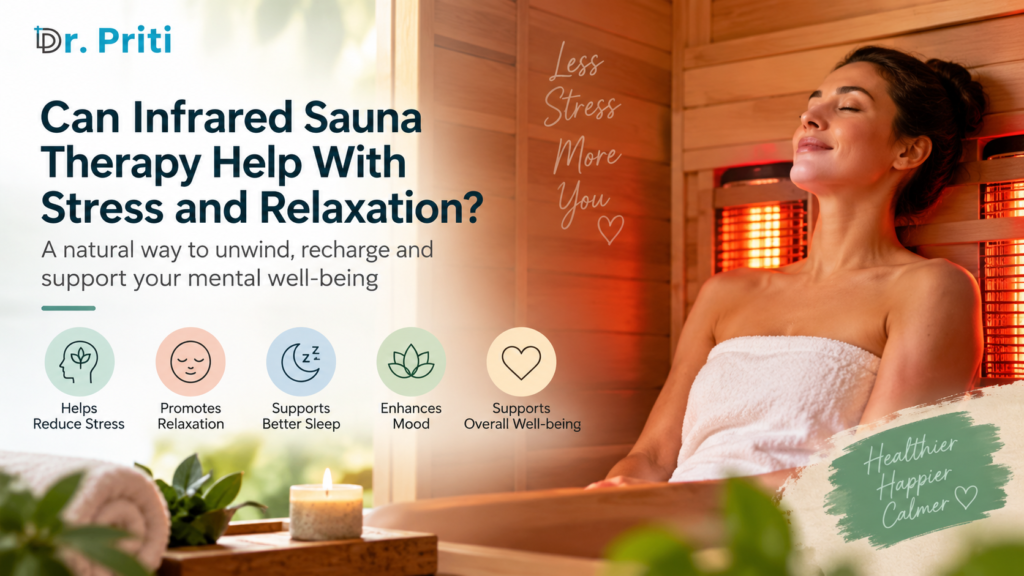
What if taking a little time away from your routine could help your body slow down? Stress has become a regular part of modern life, and its effects are not always limited to the mind. Poor sleep, muscle tension, tiredness, headaches and difficulty switching off can all accompany prolonged stress.
This is one reason heat-based wellness therapies are attracting attention. Infrared Sauna Therapy in Gurugram offers a warm, quiet environment where people can step away from daily distractions and spend time focusing on relaxation.
But can infrared heat actually help with stress? What happens to the body during a session? And is sauna therapy enough to manage ongoing stress?
Let’s look at it realistically.
Why Does Stress Make the Body Feel Tense?
Stress is not simply an emotional experience.
When you feel under pressure, your body can enter a state of increased alertness. Heart rate, muscle tension and other physiological responses can change as the body prepares to deal with a perceived challenge.
The problem arises when this state continues for too long.
You may notice that your shoulders remain tense even after work has finished. Your mind may continue running through tomorrow’s tasks while you’re trying to sleep. You may feel physically tired but mentally unable to switch off.
This is where relaxation becomes more than simply “taking a break.”
Your body needs opportunities to move from constant stimulation towards recovery.
How Could Infrared Heat Encourage Relaxation?
An infrared sauna creates a controlled warm environment.
Unlike a traditional sauna, which primarily heats the surrounding air, infrared technology uses infrared wavelengths to warm the body more directly. Because the surrounding temperature can be lower, many people find the experience more comfortable than conventional high-temperature sauna sessions.
That comfort can make it easier to sit quietly and relax.
As the body warms, blood vessels near the skin expand and sweating increases. Muscles may also feel more relaxed as the body responds to the warmth.
But the relaxation benefit isn’t necessarily about infrared energy being a “stress cure.”
Part of the experience may simply come from having 30–45 minutes where you are not answering emails, rushing between tasks or dealing with everyday distractions.
Sometimes, creating space to pause is valuable in itself.
Could Heat Help With Muscle Tension?
Have you ever noticed your neck and shoulders becoming tight during a stressful week?
Stress can be accompanied by muscle tension, particularly around the neck, shoulders and back.
Warmth can feel soothing to tense muscles. Heat exposure may increase peripheral circulation and encourage muscles to relax, which can contribute to a feeling of physical comfort.
This is one reason sauna therapy can fit naturally into a recovery routine.
However, persistent or severe pain should not simply be treated with heat. If pain continues, changes or interferes with normal activities, the underlying cause should be properly assessed.
What Does a Session Actually Feel Like?
For someone trying infrared sauna for the first time, the experience is generally quite simple.
You enter the sauna, settle comfortably and allow the warmth to gradually build.
You may initially notice gentle heat rather than the intense blast associated with a traditional sauna. As the session continues, your body becomes warmer and sweating generally increases.
Peak Wellness describes its infrared sauna sessions as lasting around 30–45 minutes, with temperature and duration adjusted according to individual comfort and health goals. The clinic also provides hydration support and uses a private sauna pod. (peakwellness.in)
That private environment can make the session feel less like a conventional treatment and more like intentional downtime.
Is Sweating Responsible for the Relaxation?
Not exactly.
Sweating is primarily your body’s natural cooling mechanism.
As body temperature rises, sweat is produced to help regulate temperature. While sweating is an obvious part of the sauna experience, it shouldn’t be confused with the main reason people may feel relaxed afterward.
The combination of warmth, reduced external stimulation, muscle relaxation and dedicated quiet time may all contribute to how you feel after a session.
This is also why claims that sauna therapy simply “sweats stress toxins out of the body” should be treated cautiously.
Your body already has sophisticated systems for processing and eliminating waste, particularly the liver and kidneys.
Can Infrared Sauna Support Better Sleep?
Stress and sleep often influence each other.
You may have experienced nights when your body is tired but your mind refuses to slow down.
A relaxing routine before bedtime can sometimes help create a smoother transition into sleep. For some people, the relaxed feeling following heat exposure may fit well into that routine.
However, infrared sauna should not be presented as a treatment for insomnia.
Healthy sleep still depends on consistent sleep and wake times, appropriate physical activity, a comfortable sleeping environment, nutrition and effective stress-management habits.
Think of sauna therapy as something that may complement these habits.
What Makes Peak Wellness’s Approach Different?
At Peak Wellness, infrared sauna is not presented as an isolated solution for every wellness concern.
The clinic takes a broader functional medicine approach under the guidance of Dr. Priti Nanda Sibal, who brings more than three decades of medical experience to her practice.
The clinic’s functional medicine philosophy looks at interconnected areas such as nutrition, gut health, endocrine balance, inflammation, stress and sleep.
Its BENDS framework includes:
- Biome Restoration
- Endocrine Balancing
- Nutritional Precision
- De-inflammation
- Stress & Sleep
This matters when discussing stress because relaxation is only one part of the picture.
If someone is constantly exhausted, sleeping poorly and feeling overwhelmed, simply adding sauna sessions without understanding the person’s lifestyle and health circumstances may not address the bigger problem.
Why Personalisation Matters With Sauna Therapy
Not everybody responds to heat in exactly the same way.
Your age, hydration, physical condition, medical history and medications can influence how your body responds to heat exposure.
Peak Wellness states that suitability is reviewed before the first infrared sauna session and that temperature can be adjusted according to the individual’s comfort and health goals.
This is particularly relevant for people who are new to sauna therapy.
The objective shouldn’t be to tolerate the highest possible temperature.
It should be to create a comfortable and appropriate experience.
Can Infrared Sauna Replace Other Stress-Management Methods?
No.
Think about stress management as a collection of small habits rather than one treatment.
Regular movement, adequate sleep, nutritious food, time outdoors, breathing exercises, social connection and appropriate professional support can all play a role.
A sauna session can provide another opportunity to slow down, but it cannot compensate for consistently poor sleep or an unsustainable lifestyle.
If stress is affecting your work, relationships, sleep or ability to function normally, speaking with an appropriate healthcare professional is important.
How Can You Make a Sauna Session More Relaxing?
You don’t need to make the experience complicated.
Try treating the session as dedicated quiet time.
Keep your phone away if possible. Focus on slow breathing. Allow your shoulders to relax instead of constantly checking the time.
Make sure you are adequately hydrated before and after the session.
And don’t assume that staying longer will produce better results.
If you feel dizzy, nauseous, unusually weak or uncomfortable, stop the session and cool down.
Listening to your body is more important than completing a predetermined duration.
Is Infrared Sauna Suitable for Everyone?
No.
Heat exposure may not be appropriate for people with certain medical conditions.
Peak Wellness advises caution for people who are heat-sensitive or have heart conditions and recommends medical assessment of suitability before treatment. (peakwellness.in)
Pregnant individuals should also seek specific medical advice before using sauna therapies.
If you have cardiovascular concerns, problems regulating blood pressure, dehydration or take medications that affect fluid balance, discuss sauna use with your healthcare professional first.
So, Can Infrared Sauna Help With Stress?
It may help create the conditions for relaxation.
The warmth can feel soothing, muscles may feel more comfortable, and the quiet environment can provide valuable time away from everyday stimulation.
But it is more accurate to describe infrared sauna as a supportive relaxation and wellness practice rather than a treatment that directly eliminates stress.
Long-term stress management still requires attention to the reasons behind your stress and the habits that influence your ability to recover.
Final Thoughts
Stress is not something that disappears simply because you spend time in a warm room.
But creating regular opportunities to pause, relax and reconnect with your body can be useful.
Infrared sauna provides a comfortable heat experience that may support relaxation, muscle comfort and recovery. For some people, the greatest benefit may simply be having uninterrupted time to slow down.
At Peak Wellness, the therapy is considered within a wider functional medicine approach, where stress and sleep are viewed alongside nutrition, metabolic health, gut health and other aspects of wellbeing.
If you’re considering Infrared Sauna Therapy in Gurugram, focus less on dramatic detox claims and more on whether the therapy is appropriate for you and how it can fit into a balanced lifestyle.
Because sometimes better wellness isn’t about adding another complicated treatment.
It is about giving your body enough opportunities to recover from everything life asks of it.
FAQs
1. Can infrared sauna help reduce stress?
It may encourage relaxation and provide quiet time away from everyday stressors.
2. Does sauna therapy help relax muscles?
Heat may increase peripheral circulation and help tense muscles feel more relaxed.
3. Can infrared sauna improve sleep?
It may support relaxation before bedtime but does not treat every sleep problem.
4. How long is an infrared sauna session?
Peak Wellness generally describes sessions lasting around 30–45 minutes.
5. Is infrared sauna suitable for everyone?
No, individual health conditions and heat tolerance should be assessed beforehand.