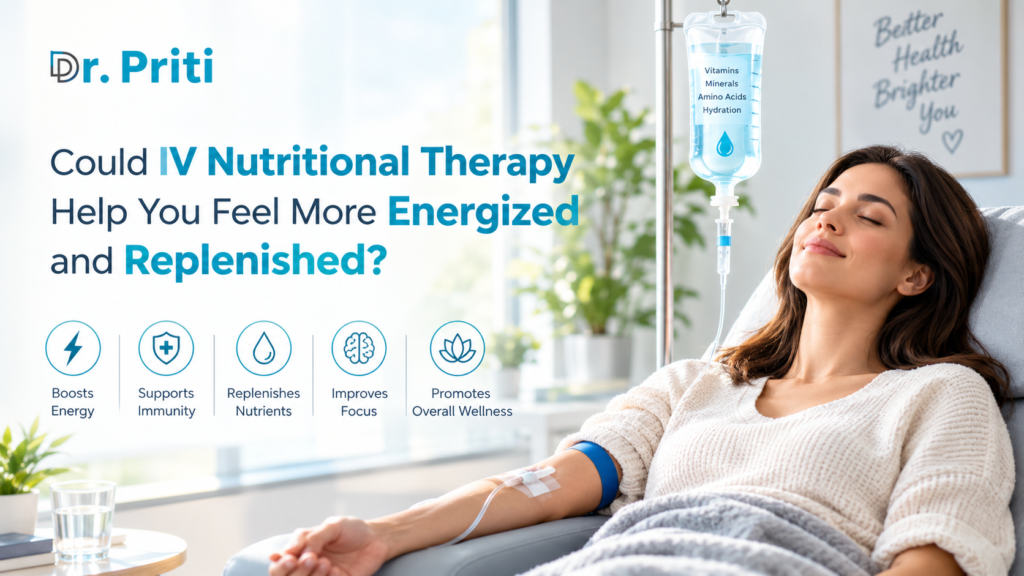
Have you ever wondered why you still feel tired even after sleeping well or eating reasonably well? Could your body sometimes need more targeted nutritional support? Best IV Nutritional Therapy in gurugram is becoming a topic of interest for people looking to support energy, hydration, recovery, and overall wellness. But does an IV infusion really make a difference? Is it better than taking supplements by mouth? And, more importantly, is IV nutritional therapy actually right for you?
The answer isn’t simply yes or no.
IV nutritional therapy can be useful in certain situations, but it should be based on individual nutritional needs, health status, medical history, and professional assessment rather than simply choosing an attractive-looking IV formula.
At Peak Wellness, IV nutritional therapy is approached as part of a personalised functional-medicine plan rather than a one-size-fits-all wellness treatment.
What Exactly Is IV Nutritional Therapy?
Let’s start with the basics.
IV stands for intravenous, which means nutrients are delivered directly into a vein through a small intravenous line.
Depending on an individual’s needs, an infusion may contain selected vitamins, minerals, antioxidants, amino acids, and hydration support.
But here’s an important question:
Does delivering nutrients directly into the bloodstream automatically make them better?
Not necessarily.
The value of IV nutritional therapy depends on why it is being used, what nutrients are included, the dose, the person’s health status, and appropriate medical supervision.
At Peak Wellness, the approach is to first understand the individual’s nutritional requirements and wellness goals before selecting an appropriate protocol.
Why Might Someone Feel Drained or Low on Energy?
Feeling tired isn’t always as simple as “I need more vitamins.”
Think about it.
Poor sleep, chronic stress, dehydration, inadequate calorie or nutrient intake, thyroid problems, blood-sugar fluctuations, iron deficiency, hormonal changes, illness, medications, and many other factors can contribute to fatigue.
So if someone constantly feels exhausted, shouldn’t the first question be:
“Why am I feeling this way?”
rather than:
Which vitamin drip should I take?
That’s where a personalized approach can make a difference.
At Peak Wellness, IV nutritional support can be considered alongside broader functional-medicine assessment involving nutrition, gut health, hormones, metabolic health, stress, sleep, and lifestyle factors.
How Does IV Nutritional Therapy Work?
Could the way nutrients enter your body influence how quickly they become available?
When you take a vitamin or mineral orally, it passes through the digestive system before being absorbed. Absorption can vary depending on digestive health, the nutrient itself, medications, diet, and individual physiology.
IV administration follows a different route.
The selected nutrients are introduced directly into the bloodstream, bypassing gastrointestinal absorption.
This doesn’t mean IV therapy should replace food or oral supplements.
Instead, it provides another method of delivering nutritional support when a healthcare professional believes it is appropriate.
The key is personalisation.
Could IV Therapy Help You Feel More Energized?
This is probably the question most people want answered.
The honest answer is: it depends on why you feel low on energy.
Nutrients play important roles in normal energy metabolism, cellular function, antioxidant defence, immune function, and tissue maintenance.
If someone has an identified nutritional deficiency or increased nutritional requirements, addressing that underlying issue may support normal physiological function.
But IV therapy shouldn’t be marketed as a guaranteed solution for chronic fatigue.
If you’re constantly exhausted, it may be more useful to investigate the underlying cause rather than repeatedly receiving an infusion.
At Peak Wellness, the clinic lists low energy, nutrient deficiencies, sleep concerns, headaches, reduced performance, recovery needs, and general wellness among reasons people may explore IV nutritional support.
What Nutrients Can Be Included?
Does every IV contain the same ingredients?
No.
The formulation can vary depending on the individual’s requirements and treatment goals.
Depending on the protocol, nutritional infusions may include:
- Vitamins
- Minerals
- Antioxidants
- Amino acids
- Hydration support
- Other selected nutrients
This is why choosing an IV simply because it has a catchy name or promises “maximum energy” may not be the best approach.
A better question is:
What does my body actually need?
At Peak Wellness, nutritional requirements, health history, bloodwork, and individual goals can be considered when developing an IV nutritional protocol.
Could IV Therapy Support Recovery?
Have you ever felt completely drained after intense physical activity, illness, travel, or a demanding period at work?
Recovery requires adequate hydration, nutrition, rest, and time.
Nutrients are involved in many of the processes required for normal tissue maintenance and energy production. When nutritional requirements aren’t being adequately met, appropriate nutritional support may form part of a broader recovery plan.
However, IV therapy shouldn’t be viewed as a shortcut around sleep, proper nutrition, physical recovery, or medical treatment.
It works best when it has a clear purpose.
What Happens During an IV Nutritional Therapy Session?
Are you wondering whether the process is complicated?
Generally, it is relatively straightforward.
At Peak Wellness, the process begins with an assessment of health and nutritional needs. Once an appropriate protocol has been selected, a small IV line is placed into a vein and the nutrient solution is administered gradually. The clinic describes infusion times of approximately 15–45 minutes, depending on the treatment.
You may experience a brief pinch or discomfort when the IV is inserted.
During the infusion, the clinical team can monitor you and make adjustments when appropriate.
Even though the process is simple, remember that IV therapy involves an invasive procedure. That’s why professional supervision matters.
Is IV Nutritional Therapy Suitable for Everyone?
This is an important question that shouldn’t be skipped.
No, IV nutritional therapy isn’t automatically suitable for everyone.
Your medical history, medications, allergies, kidney function, heart health, pregnancy status, nutritional requirements, and other factors may influence whether a particular infusion is appropriate.
Someone experiencing fatigue, for example, may actually need investigation for an underlying medical condition rather than an IV nutrient infusion.
That is why a responsible provider should assess the person before recommending treatment.
IV Nutritional Therapy in Gurugram: Why Choose Peak Wellness?
If you’re considering Best IV Nutritional Therapy in gurugram, shouldn’t the medical expertise behind the treatment matter as much as the IV itself?
At Peak Wellness, IV nutritional therapy is offered within a physician-led functional-medicine environment.
The clinic is led by Dr. Priti Nanda Sibal, whose profile states that she has more than 35 years of medical experience and has helped more than 4,980 patients. Peak Wellness also describes her functional-medicine training through A4M/George Washington University.
What makes the approach different is the focus on the person rather than simply the infusion.
Why consider Peak Wellness?
Personalised protocols:
IV nutritional support is selected according to individual nutritional needs and health goals.
Medical assessment:
Health history and relevant bloodwork can help guide nutritional decisions.
Functional-medicine approach:
The clinic looks at areas such as nutrition, gut health, hormones, metabolic health, inflammation, stress, and sleep as part of the wider health picture.
Experienced medical leadership:
Treatment is provided within a physician-led environment under Dr. Priti Nanda Sibal.
Integrated care:
IV nutritional therapy can be considered alongside other services when appropriate rather than being treated as an isolated procedure.
The important point is simple:
More treatment doesn’t automatically mean better treatment.
The right nutritional support should have a reason behind it.
What Should You Ask Before Getting an IV?
Before starting an IV infusion, why not ask a few straightforward questions?
Ask:
- What nutrients will I receive?
- Why do I need these nutrients?
- Do I need blood tests first?
- Could oral nutrition address the same need?
- Are there risks based on my medical history?
- Who will supervise the infusion?
- How often would treatment be appropriate?
These questions can help you make a more informed decision instead of choosing an IV simply because it sounds appealing.
Can IV Therapy Replace a Healthy Diet?
Absolutely not.
A balanced diet remains the foundation of good nutrition.
Vegetables, fruits, proteins, healthy fats, whole foods, adequate hydration, and appropriate calories provide much more than isolated vitamins or minerals.
IV therapy should therefore be viewed as targeted nutritional support, not a replacement for healthy eating.
Similarly, if you have a diagnosed medical condition, IV therapy should not replace prescribed medication or appropriate medical treatment.
Final Thoughts: Could IV Nutritional Therapy Be Right for You?
So, could IV Nutritional Therapy help you feel more energized and replenished?
It may be useful for appropriately selected people when there is a clear nutritional or hydration-related reason for using it.
But the most important part isn’t the IV bag.
It’s understanding why you need it.
If you’re frequently tired, struggling with recovery, concerned about nutritional deficiencies, or simply exploring personalised wellness support, start by understanding your health rather than choosing a treatment based on a trend.
At Peak Wellness, the approach combines IV nutritional support with a broader functional-medicine perspective, allowing nutritional decisions to be considered alongside lifestyle, metabolic health, gut health, hormones, stress, sleep, and other individual factors.
Because sometimes the best question isn’t:
Which IV should I get?
It’s:
“What does my body actually need—and how do we know?”
FAQs
1. What is IV Nutritional Therapy?
It delivers selected nutrients directly into the bloodstream through an IV.
2. Can IV therapy help with low energy?
It may help when nutritional needs or deficiencies are contributing factors.
3. How long does an IV session take?
Peak Wellness describes sessions of approximately 15–45 minutes.
4. Is IV therapy suitable for everyone?
No. Individual medical and nutritional factors should be assessed first.
5. Can IV therapy replace healthy eating?
No. It should complement, not replace, balanced nutrition.