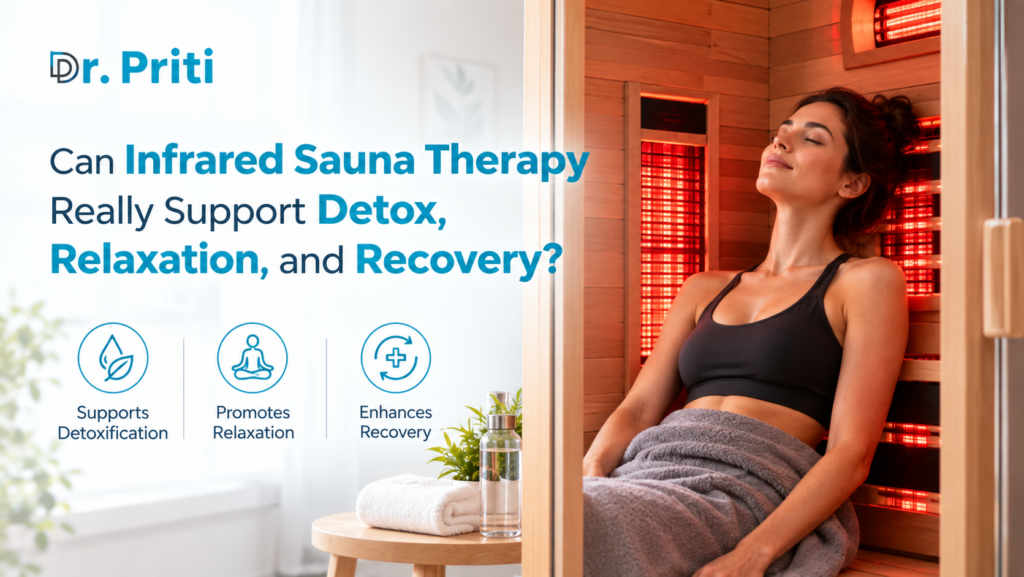
Have you ever finished a stressful day feeling tense, tired, and simply unable to switch off? Or perhaps your muscles feel stiff after exercise and you wish there were a relaxing way to support recovery. Best Infrared Sauna Therapy in gurugram is becoming an increasingly popular topic among people looking for a comfortable heat-based wellness experience. But does infrared sauna therapy really help with detox, relaxation, and recovery? Can sweating actually remove toxins? And is infrared heat genuinely different from sitting in a traditional sauna?
Let’s look at it realistically.
Infrared sauna therapy uses infrared wavelengths to warm the body more directly rather than simply heating the surrounding air. At Peak Wellness, the therapy uses near, mid, and far infrared wavelengths and is offered as part of a broader functional-medicine and wellness approach.
But before believing every claim you see online, it is worth understanding what infrared sauna can and cannot realistically do.
What Exactly Is Infrared Sauna Therapy?
So, how is an infrared sauna different from a traditional sauna?
A conventional sauna mainly heats the surrounding air, which then warms your body. An infrared sauna uses infrared energy to warm the body more directly.
Because the surrounding temperature can be lower than in many traditional saunas, some people find infrared sessions more comfortable and easier to tolerate.
At Peak Wellness, sessions are designed around individual comfort and health goals. The clinic describes its infrared sauna environment as private and personalised, with temperature and duration adjusted according to the individual’s needs. Sessions generally last around 30–45 minutes.
So, you’re not simply sitting in a hot room.
The goal is to create a controlled heat experience that encourages sweating, relaxation, and physical comfort.
Can Infrared Sauna Really “Detox” Your Body?
This is probably the biggest question surrounding infrared sauna therapy.
You may have seen claims that sweating removes toxins, heavy metals, and other unwanted substances from the body.
But should you take those claims literally?
Not quite.
Sweating is primarily your body’s way of regulating temperature. Your liver and kidneys perform the major work involved in processing and eliminating many substances from the body.
Some substances can be found in sweat, but that doesn’t mean sweating is the body’s primary detoxification pathway. Even Cleveland Clinic notes that research around sauna-based detoxification remains limited.
So what is a more realistic way to think about it?
Infrared sauna can encourage sweating while providing warmth, relaxation, and increased peripheral circulation. These effects may contribute to the refreshed feeling many people experience after a session.
In other words:
Think of infrared sauna as a supportive wellness practice—not a magical toxin-removal treatment.
Could Infrared Heat Help You Relax?
Have you ever noticed how your shoulders naturally loosen when you’re warm and comfortable?
Heat can feel soothing to the body.
During an infrared sauna session, your body gradually warms and your blood vessels near the skin can widen. The combination of warmth, reduced distractions, and quiet time may help you feel physically and mentally more relaxed.
And sometimes the environment itself matters.
Imagine having 30–45 minutes where you’re not answering messages, checking emails, rushing between meetings, or thinking about your next task.
That pause can be valuable.
Research and clinical commentary around sauna use suggest that sauna sessions may support relaxation and may be associated with improvements in perceived stress and sleep for some people.
But infrared sauna should not be presented as a treatment for anxiety, depression, or chronic stress.
Long-term stress still requires attention to sleep, lifestyle, workload, emotional health, physical activity, and other underlying factors.
Could It Support Muscle Recovery?
What happens after a hard workout?
Your muscles may feel tight, stiff, or simply tired.
Warmth can encourage peripheral circulation and muscle relaxation, which may make the body feel more comfortable after physical activity.
This is one reason sauna therapy is often incorporated into recovery routines.
Peak Wellness positions infrared sauna for muscle recovery, pain relief, athletes, and fitness enthusiasts.
However, there is an important distinction:
Sauna therapy can complement recovery but it doesn’t replace recovery fundamentals.
Your body still needs:
- Adequate hydration
- Sufficient protein and nutrition
- Quality sleep
- Rest between demanding workouts
- Appropriate exercise programming
- Medical care when pain or injury requires it
Think of the sauna as one part of the routine rather than the entire recovery strategy.
Can Infrared Sauna Improve Circulation?
Could heat actually affect blood flow?
Yes, heat exposure causes blood vessels near the skin to dilate, which increases peripheral circulation.
This can contribute to the warm, flushed sensation you experience during a sauna session.
For some people, that warmth can feel particularly comfortable when their muscles feel tight after physical activity.
However, people with cardiovascular conditions or problems regulating blood pressure should not assume that sauna therapy is automatically appropriate.
Medical suitability matters.
What About Weight Loss?
This is another area where expectations can easily become unrealistic.
Peak Wellness mentions calorie expenditure and metabolic support as part of its infrared sauna programme.
But here’s the important distinction:
Sweating is not the same thing as losing body fat.
Your weight may temporarily decrease after a sauna session because you have lost water through sweating. Once you rehydrate, that water weight generally returns.
So if your goal is sustainable weight management, infrared sauna should never replace nutrition, exercise, sleep, metabolic assessment, or an appropriate weight-management plan.
The sauna can be a wellness addition not a shortcut.
Could It Help With Sleep?
Do you ever feel physically exhausted but still struggle to switch off at night?
Relaxation may help create a better transition toward sleep.
Some people find that a warm, calming routine helps them feel more relaxed before bedtime. Sauna use has also been associated with better sleep in some research, although it should not be treated as a cure for insomnia.
If sleep problems are persistent, the underlying causes should be explored.
Poor sleep can be influenced by stress, hormones, medications, lifestyle, caffeine, sleep schedules, and medical conditions.
Again, infrared sauna can be part of a routine—but it shouldn’t be the entire solution.
What Happens During an Infrared Sauna Session?
Are you wondering what your first session might actually feel like?
At Peak Wellness, the session takes place in a private sauna pod. The temperature and duration can be adjusted according to comfort and health goals.
The clinic describes operating temperatures of approximately 110°F–140°F and sessions of around 30–45 minutes. Hydration support is also provided.
You gradually begin to feel warmer.
As your body temperature rises, sweating increases.
You may simply sit back, relax, listen to music, meditate, or use the quiet time to disconnect from your normal routine.
Afterward, you may feel warm, relaxed, and slightly tired.
Hydration is important because you lose fluid through sweating.
Is Infrared Sauna Safe for Everyone?
This question shouldn’t be overlooked.
Infrared sauna may be well tolerated by many healthy adults, but heat exposure isn’t appropriate for everyone.
Peak Wellness specifically advises caution for people who are pregnant or have heat sensitivity or certain heart conditions and recommends medical guidance where appropriate.
You should also be cautious if you are dehydrated or have a condition or medication that affects fluid balance or blood-pressure regulation.
During a session, stop if you experience significant dizziness, nausea, unusual weakness, breathing difficulty, or other concerning symptoms.
More heat and longer sessions do not automatically mean better results.
Why Choose Peak Wellness?
If you’re researching Best Infrared Sauna Therapy in gurugram, shouldn’t you look beyond the sauna itself?
At Peak Wellness, infrared sauna therapy is incorporated into a broader functional-medicine environment rather than being presented as an isolated wellness trend.
The clinic is led by Dr. Priti Nanda Sibal, who the clinic states has more than 35 years of medical experience and has helped more than 4,980 patients.
The wider Peak Wellness approach considers interconnected areas such as nutrition, gut health, metabolic health, hormones, inflammation, stress, and sleep.
That matters because recovery is rarely about one therapy.
For example, if someone is constantly tired and sleeping poorly, simply adding sauna sessions may not address the reason they feel exhausted. Understanding nutrition, lifestyle, stress, sleep, and underlying health factors may be much more useful.
Peak Wellness also describes a personalised health process involving assessment, testing when appropriate, customised protocols, and ongoing support.
What makes the experience different?
Private sessions:
The sauna experience is designed around individual comfort rather than a shared environment.
Personalised temperature and duration:
The session can be adjusted according to tolerance and health goals.
Hydration support:
Hydration is considered an important part of the experience.
Medical oversight:
The clinic states that Dr. Priti reviews suitability before a first session.
Functional-medicine integration:
Infrared sauna can be considered alongside nutrition, lifestyle, and other therapies when appropriate.
How Can You Get More From an Infrared Sauna Session?
Want to make the experience more comfortable?
A few simple habits can help.
Stay Hydrated
Drink enough water before and after your session, especially if you sweat heavily.
Start Gradually
If you’re new to sauna therapy, don’t assume you need the longest or hottest session.
Avoid Heavy Meals Immediately Before
A very heavy meal can make heat exposure uncomfortable.
Listen to Your Body
If you feel dizzy, nauseous, unusually weak, or uncomfortable, stop the session.
Focus on Recovery
Combine sauna therapy with good sleep, balanced nutrition, hydration, and appropriate physical activity.
Final Thoughts: Is Infrared Sauna Really Worth Exploring?
So, can infrared sauna therapy really support detox, relaxation, and recovery?
It can be a useful wellness practice for some people, particularly as a way to experience controlled heat, sweating, relaxation, and physical comfort.
But realistic expectations matter.
Infrared sauna isn’t a miracle detox treatment. It doesn’t replace your liver and kidneys, and sweating shouldn’t be confused with the body’s primary detoxification processes.
It also isn’t a substitute for proper nutrition, exercise, sleep, medical treatment, or professional evaluation.
Instead, think about it this way:
Your body already knows how to regulate temperature, recover, and maintain balance. Infrared sauna may provide a supportive environment that helps you relax and complement those natural processes.
And perhaps that’s the most useful way to approach it.
Not as a miracle.
Not as a shortcut.
But as one carefully considered part of a healthier lifestyle.
FAQs
1. Does infrared sauna make you sweat?
Yes. Infrared heat gradually warms the body and encourages sweating.
2. Can infrared sauna support muscle recovery?
It may encourage relaxation and circulation, supporting post-exercise comfort.
3. Does infrared sauna remove toxins?
Sweating occurs, but the liver and kidneys remain the body’s primary detoxification systems.
4. How long is an infrared sauna session?
Peak Wellness generally describes sessions lasting around 30–45 minutes.
5. Is infrared sauna suitable for everyone?
No. Individual health conditions and heat tolerance should be considered beforehand.