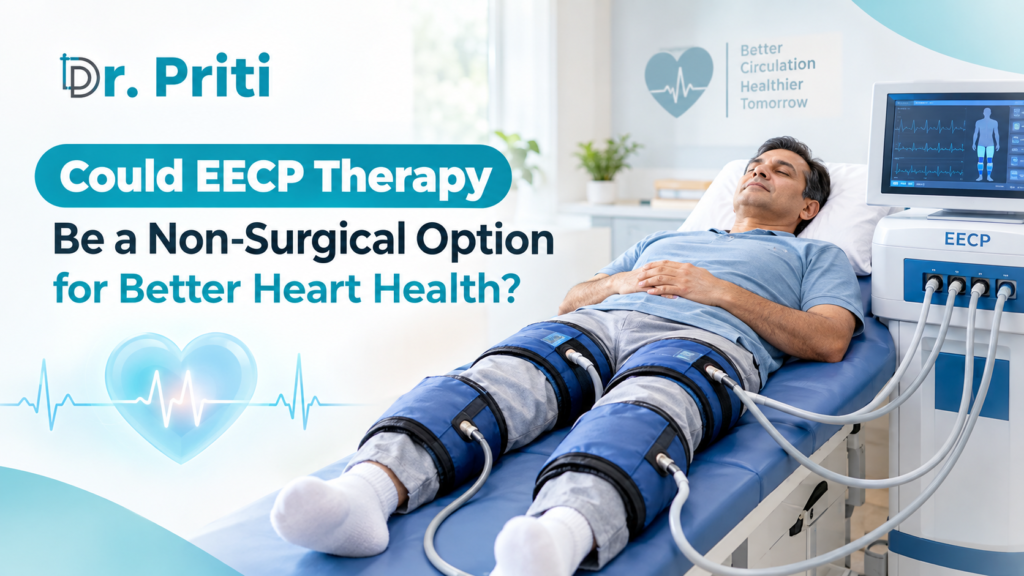
Could there be a way to support heart health and improve circulation without undergoing an invasive procedure? This is one reason Best EECP Therapy in gurugram is becoming an option people ask about when they want to understand non-surgical approaches to cardiovascular care. EECP, or Enhanced External Counterpulsation, is a non-invasive therapy designed to support blood flow and may help reduce symptoms such as angina in appropriately selected patients. But is it suitable for everyone? And can it really be considered an alternative to surgery?
Let’s understand what EECP actually does and where it fits into modern heart care.
What Exactly Is EECP Therapy?
EECP stands for Enhanced External Counterpulsation.
Unlike bypass surgery or catheter-based procedures, EECP does not involve cutting the body, inserting a stent, or opening a blood vessel surgically.
During treatment, inflatable cuffs are placed around the lower body, generally around the calves, thighs, and buttocks. These cuffs inflate and deflate in coordination with the patient’s heartbeat.
The idea is to assist blood circulation during specific phases of the cardiac cycle.
Peak Wellness describes ECP/EECP as an advanced therapy focused on heart health, circulation improvement, and angina relief.
But here’s the important point:
EECP is not simply a replacement for every cardiac procedure.
Whether it is appropriate depends on a person’s cardiovascular condition, medical history, symptoms, medications, and overall health.
Why Are People Looking for Non-Surgical Heart Options?
Heart-related symptoms can be worrying.
Someone may experience chest discomfort while walking, climbing stairs, or performing daily activities. Another person may feel unusually tired or short of breath.
Naturally, the first question is often:
“Do I really need an invasive procedure?”
Sometimes an intervention such as angioplasty, stenting, or bypass surgery is medically necessary. Those decisions should never be delayed because someone wants a non-surgical option.
However, there are situations where doctors may consider non-invasive therapies as part of an individual’s broader cardiovascular management.
That is where EECP enters the conversation.
How Does EECP Work?
So, what happens during an EECP session?
The patient lies comfortably while pneumatic cuffs are placed around the legs and lower body.
The cuffs are electronically coordinated with the heartbeat. They inflate sequentially during diastole and release before systole.
In simple language, the treatment is designed to help move blood back toward the heart at the appropriate point in the cardiac cycle and reduce the workload placed on the heart during another phase.
Over a course of treatment, this repeated mechanical assistance is intended to support circulation and may encourage the development or improved function of collateral blood vessels in some patients.
That sounds complicated, doesn’t it?
The easiest way to think about it is:
EECP uses externally applied pressure and precise timing to assist circulation—without surgery.
Could EECP Help With Angina?
This is one of the biggest questions patients have.
Angina refers to chest discomfort caused by inadequate blood flow to the heart muscle. For some appropriately selected patients with chronic stable angina, EECP may help reduce symptoms and improve exercise tolerance.
However, chest pain should never automatically be assumed to be ordinary angina.
New, severe, worsening, or unexplained chest pain requires urgent medical evaluation.
EECP should therefore be considered only after proper cardiovascular assessment and alongside appropriate medical care.
Is EECP the Same as a Heart Bypass?
No.
This distinction is extremely important.
Bypass surgery physically creates a new route around blocked coronary arteries. EECP does not.
Instead, EECP is a non-invasive therapy that uses external pneumatic compression and cardiac timing to support circulation.
Therefore, saying that EECP “replaces bypass surgery” for everyone would be misleading.
A better way to look at it is that EECP may be a potential non-invasive treatment option for selected patients, particularly when symptoms persist despite conventional treatment or when a specialist determines that it is appropriate.
Your cardiologist or qualified physician should determine where it fits into your care.
What Does an EECP Session Feel Like?
Many people are understandably nervous before their first session.
Will it hurt?
Will the cuffs feel uncomfortable?
What happens during the treatment?
The cuffs repeatedly inflate and deflate, so you will feel pressure around your legs and lower body. The sensation may take some getting used to, but the treatment is non-surgical.
The exact experience can vary from person to person.
At Peak Wellness, EECP is offered following a personalised assessment rather than treating every patient according to a standard approach. The clinic specifically encourages patients to determine whether EECP is appropriate through a consultation with Dr. Priti Nanda Sibal.
Who Might Consider EECP?
EECP may be discussed for people with certain cardiovascular concerns, particularly those experiencing chronic stable angina or reduced exercise tolerance where a physician believes the therapy could be appropriate.
But eligibility matters.
A proper assessment may consider:
- Your cardiovascular history
- Current symptoms
- Previous cardiac procedures
- Blood pressure
- Medications
- Existing medical conditions
- Overall physical health
- Whether EECP is clinically appropriate
This is why choosing a supervised medical setting matters.
EECP should not be approached as a general wellness treatment simply because it is non-invasive.
Can EECP Improve Overall Heart Health?
This question needs a balanced answer.
EECP may support circulation and symptom management in selected patients, but heart health is much bigger than one therapy.
Blood pressure, cholesterol, blood sugar, smoking, physical activity, sleep, stress, body weight, nutrition, and prescribed medications can all influence cardiovascular risk.
At Peak Wellness, EECP sits within a broader functional-medicine environment that also focuses on metabolic health, diabetes, weight management, nutrition, and lifestyle factors. The clinic’s approach emphasises looking beyond isolated symptoms and developing personalised protocols.
That broader perspective can be useful because cardiovascular health rarely depends on only one factor.
Why Choose Peak Wellness for EECP Therapy?
When considering any heart-related treatment, experience and medical supervision should come before price or marketing claims.
Peak Wellness is led by Dr. Priti Nanda Sibal, a GMC Amritsar graduate with more than 35 years of medical experience. The clinic states that she has helped more than 4,980 patients and has training in functional medicine through A4M/George Washington University.
The clinic’s EECP service is positioned around personalised assessment rather than a one-size-fits-all protocol. Patients are encouraged to first understand whether EECP is appropriate for their individual situation.
Peak Wellness also provides other health services, including functional medicine, diabetes management, gut health, weight management, HBOT, ozone therapy, IV nutritional therapy, and hormone-focused care.
This can be particularly relevant for people whose cardiovascular concerns overlap with metabolic issues such as diabetes, obesity, or lifestyle-related risk factors.
Is EECP Right for You?
There is no universal answer.
If you have been experiencing persistent angina, reduced exercise tolerance, or have been exploring non-surgical approaches to cardiovascular care, you may have come across Best EECP Therapy in gurugram while researching your options.
But don’t make the decision based on a search result alone.
The right question is:
“Is EECP medically appropriate for my specific heart condition?”
A qualified doctor can review your history, symptoms, previous treatments, and current health before recommending whether EECP should be considered.
And remember—if you experience sudden or severe chest pain, difficulty breathing, fainting, cold sweating, or other possible signs of a heart attack, seek emergency medical care immediately rather than waiting for an EECP consultation.
Final Thoughts
Could EECP be a non-surgical option for better heart health?
For appropriately selected patients, it can be an important non-invasive therapy to discuss with a qualified healthcare professional, particularly when the goal is to support circulation and manage certain symptoms such as chronic stable angina.
But EECP isn’t a magic solution, and it isn’t appropriate for everyone.
The strongest approach is one that combines proper medical evaluation with evidence-based cardiovascular care, healthy lifestyle habits, and ongoing monitoring.
If you’re considering EECP, start with a conversation—not a treatment package.
Understand your heart first. Then decide which option makes sense for you.
FAQs
1. Is EECP completely non-surgical?
Yes, EECP is performed externally without surgery or implanted devices.
2. Can EECP help with angina?
It may help selected patients with chronic stable angina symptoms.
3. Is EECP suitable for everyone?
No. Suitability depends on your medical history and cardiovascular condition.
4. Does EECP replace bypass surgery?
No. EECP and bypass surgery work through completely different approaches.
5. Should I consult a doctor before EECP?
Yes. A medical assessment is important before starting EECP therapy.