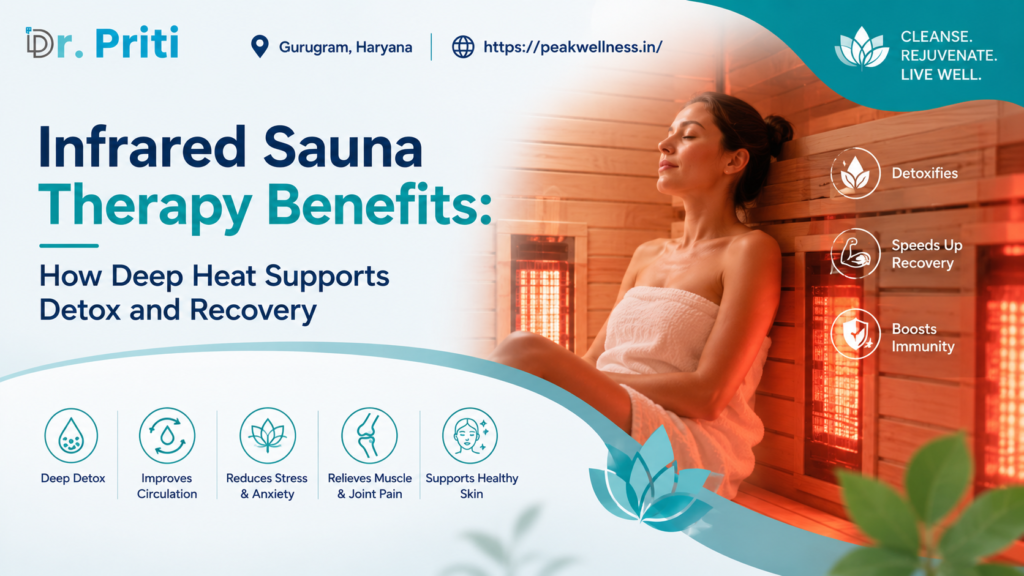
Have you ever noticed how relaxed and refreshed you feel after spending time in gentle heat? Infrared Sauna Therapy in Gurugram offers a different sauna experience by using infrared wavelengths to warm the body more directly than conventional saunas. The result is a comfortable, deep-heating experience that can encourage sweating, relaxation and recovery.
But what makes infrared heat different from a traditional sauna? Can sweating really support detoxification? And could regular sessions help with muscle recovery, stress and overall wellness?
Let’s explore the science, potential benefits and what you can realistically expect from infrared sauna therapy.
What Is Infrared Sauna Therapy?
Unlike a traditional sauna, which primarily heats the surrounding air, an infrared sauna uses infrared energy to warm the body directly.
Because the surrounding temperature can be lower than in a conventional sauna, many people find infrared sessions easier to tolerate.
The experience is usually gentle and gradual. As the body warms, you may begin to sweat and notice your muscles relaxing.
At Peak Wellness, infrared sauna therapy is incorporated into a broader wellness and functional medicine approach, where therapies are selected according to an individual’s health goals and overall condition.
How Does Infrared Heat Work?
So, what happens when your body is exposed to infrared heat?
The warmth raises your body’s temperature and encourages physiological responses similar to those that occur during exposure to heat.
Your blood vessels can dilate, circulation increases and your body works to regulate its temperature through sweating.
This process can create several effects that people associate with sauna therapy, including relaxation, temporary muscle comfort and a feeling of physical rejuvenation.
However, it is important to understand that sweating itself is not the body’s primary detoxification mechanism. Your liver and kidneys perform the major work of processing and eliminating many substances from the body.
Infrared sauna therapy should therefore be viewed as a supportive wellness practice rather than a replacement for the body’s natural detoxification systems.
1. Encourages Sweating
One of the most noticeable effects of an infrared sauna is sweating.
As your body warms, it activates its natural cooling mechanism. Sweating helps regulate body temperature and can leave you feeling refreshed after the session.
While sweat contains small amounts of certain substances, it should not be described as the primary way your body removes toxins.
The bigger benefit may be the combination of heat exposure, relaxation and circulation that accompanies the sweating response.
2. Supports Relaxation
When was the last time you had uninterrupted time to simply slow down?
Infrared sauna sessions can create a calm environment where you can disconnect from daily activities and allow your body to relax.
Heat can encourage muscle relaxation, while the quiet environment may help reduce the feeling of physical and mental tension.
For people with busy routines, this relaxation component can be one of the most valuable parts of the experience.
3. May Support Muscle Recovery
Do your muscles feel tight after exercise?
Heat exposure can increase circulation and promote relaxation of tense muscles. This may help some people feel more comfortable following physical activity.
Infrared sauna sessions are therefore often incorporated into recovery routines by people who exercise regularly.
However, sauna therapy should complement—not replace—proper hydration, nutrition, sleep and appropriate recovery between workouts.
4. May Promote Circulation
Heat causes blood vessels near the skin to widen, increasing blood flow.
This temporary increase in circulation contributes to the warm, flushed feeling experienced during a sauna session.
Improved circulation may also contribute to the feeling of relaxed muscles and overall physical comfort.
People with cardiovascular conditions or other health concerns should discuss sauna use with an appropriate healthcare professional before beginning regular sessions.
5. Supports a Relaxing Post-Workout Routine
What if your recovery routine could include more than stretching?
For some people, infrared sauna therapy can be a comfortable addition after physical activity.
The warmth may help loosen muscles and create a transition from an active workout to a more relaxed state.
But timing matters. Going directly into intense heat when you are already dehydrated may not be appropriate.
Rehydration should remain a priority.
6. May Support Skin Appearance
Have you noticed your skin looks different after spending time in a warm environment?
Increased circulation and sweating can temporarily give the skin a warm, refreshed appearance.
Some people also enjoy sauna sessions as part of their overall skincare and wellness routine.
However, infrared sauna therapy should not be considered a treatment for every skin condition, and it cannot replace appropriate dermatological care.
7. Can Support Stress Management
Stress doesn’t only affect your thoughts—it can also influence muscle tension, sleep and overall wellbeing.
Taking time to relax in a sauna can provide a useful break from constant stimulation.
The combination of warmth, quiet and intentional relaxation may help some people feel calmer after a session.
Think of it less as a magical stress cure and more as another practical tool that can support a healthy relaxation routine.
8. May Support Better Sleep Habits
Could a relaxing evening routine help you sleep better?
For some people, the relaxation that follows a sauna session may make it easier to transition into rest.
A consistent sleep schedule, reduced screen exposure before bed, appropriate exercise and stress management remain much more important foundations for healthy sleep.
Infrared sauna therapy can potentially complement these habits rather than replace them.
9. Supports Overall Wellness
Wellness is rarely about one treatment.
A healthier lifestyle usually involves several pieces working together:
- Nutritious food
- Regular physical activity
- Quality sleep
- Stress management
- Hydration
- Preventive healthcare
- Time for recovery
Infrared sauna therapy can fit into this picture as a supportive wellness practice.
The goal should be to use it as part of a balanced routine rather than expecting one therapy to solve multiple health problems.
10. Provides a Comfortable Heat Experience
Traditional saunas can feel extremely hot.
For some people, that intensity makes it difficult to stay comfortable for long.
Infrared saunas generally operate at lower ambient temperatures while using infrared energy to warm the body directly. This can create a gentler experience for people who prefer less intense heat.
Comfort is important because relaxation is much easier when you are not constantly trying to tolerate excessive heat.
Infrared Sauna and Detox : What Should You Really Expect?
Let’s address the word detox carefully.
You will often see infrared sauna therapy marketed as a powerful detox treatment.
The body does have natural detoxification systems, particularly the liver and kidneys. Sweating plays a role in temperature regulation and contains small quantities of various substances, but it is not the body’s main detoxification pathway.
So, rather than saying that an infrared sauna “flushes toxins from your body,” it is more accurate to say that heat exposure encourages sweating and may support relaxation and circulation.
That distinction makes the therapy easier to understand without unrealistic promises.
Is Infrared Sauna Therapy Safe?
For many healthy adults, sauna use can be well tolerated when sessions are appropriately managed.
But heat exposure is not suitable for everyone.
People with certain heart conditions, problems with blood pressure regulation, dehydration, pregnancy or other medical concerns should seek professional advice before using an infrared sauna.
You should also stop a session if you experience dizziness, nausea, unusual weakness, shortness of breath or significant discomfort.
Hydration before and after the session is important, particularly if you sweat heavily.
What Should You Expect During a Session?
If you’ve never tried infrared sauna therapy, the experience may be simpler than you imagine.
You enter a heated infrared sauna and allow your body to gradually warm.
Initially, you may feel comfortable warmth. As the session continues, sweating generally increases.
Depending on your individual tolerance and the protocol being used, the session duration and temperature can vary.
Afterward, you may feel relaxed, warm and slightly tired.
Drinking water and allowing your body to cool gradually can help you feel comfortable afterward.
Why Choose Peak Wellness?
At Peak Wellness, infrared sauna therapy is part of a broader functional medicine environment rather than being treated as an isolated wellness trend.
The clinic is led by Dr. Priti Nanda Sibal, who brings more than 30 years of medical experience to her work. Her approach focuses on understanding the individual and combining appropriate lifestyle, nutritional and therapeutic strategies.
The wider Peak Wellness philosophy considers areas such as nutrition, gut health, metabolic balance, inflammation, stress and sleep.
This matters because recovery and wellness rarely depend on one therapy.
A sauna session may help you relax, but your long-term health is still influenced by the everyday choices you make outside the treatment room.
How to Get More From Your Sauna Routine
Want to make your sessions more comfortable?
Keep a few simple habits in mind.
Hydrate
Drink enough fluids before and after your session.
Avoid Heavy Meals Immediately Before
A very heavy meal can make heat exposure uncomfortable.
Start Gradually
If you are new to sauna therapy, give your body time to adapt.
Listen to Your Body
More heat or longer sessions do not automatically mean better results.
Prioritise Recovery
Pair sauna sessions with adequate sleep, nutritious food and appropriate physical activity.
Final Thoughts
Infrared sauna therapy is more than simply sitting in a hot room.
The controlled heat can encourage sweating, promote relaxation, increase peripheral circulation and help create a comfortable recovery experience. For many people, the combination of warmth and relaxation is the main attraction.
But it is equally important to maintain realistic expectations.
Infrared sauna therapy should not be considered a miracle detox, a replacement for medical treatment or a shortcut to perfect health.
When combined with good nutrition, hydration, exercise, sleep and stress management, it can become one part of a broader wellness routine.
For people exploring Infrared Sauna Therapy in Gurugram, Peak Wellness offers a personalised environment where heat-based wellness can be considered alongside broader functional medicine principles.
Ultimately, the best wellness routine is not the one with the most therapies.
It is the one that fits your body, your goals and your everyday lifestyle.
FAQs
1. Does infrared sauna therapy make you sweat?
Yes, infrared heat gradually warms the body and can stimulate natural sweating.
2. Can infrared sauna help muscle recovery?
It may promote relaxation and circulation, which can support post-exercise recovery.
3. Does infrared sauna detox the body?
It supports sweating, but the liver and kidneys remain the body’s primary detoxification systems.
4. How often should you use an infrared sauna?
Frequency should depend on individual tolerance, health status and professional guidance.
5. Should you drink water after sauna therapy?
Yes, replacing fluids lost through sweating is an important part of post-session recovery.