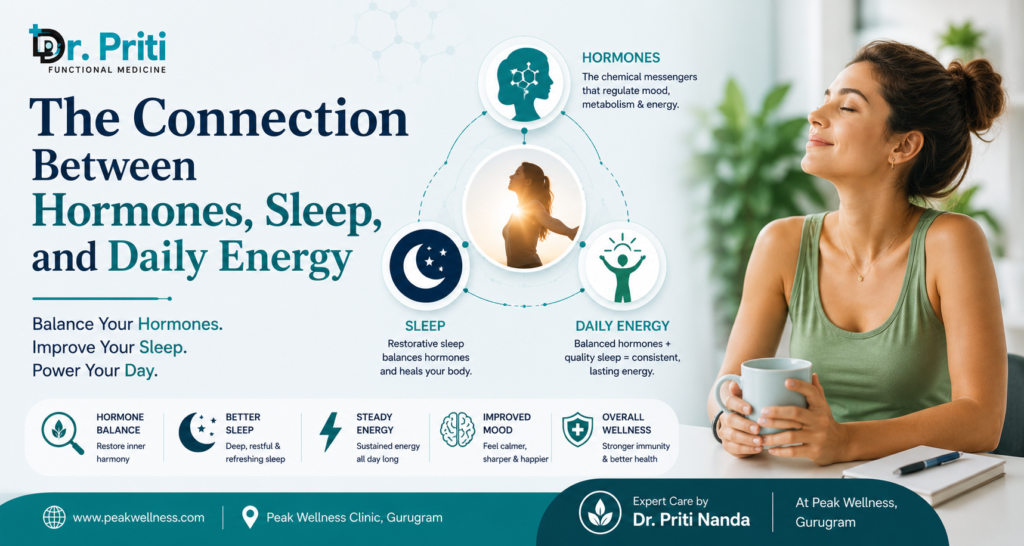
Have you ever slept for eight hours but still felt exhausted the next morning? Or noticed that some days you struggle to concentrate, feel irritable, and lack the energy to complete even simple tasks? While many people blame a busy lifestyle or ageing, the real reason may be more complex.
Your hormones, sleep quality, and daily energy are closely connected. When one of these is disrupted, the others are often affected as well. This is why many people experience persistent fatigue, poor sleep, mood changes and reduced productivity without understanding the underlying cause.
Instead of treating these symptoms individually, it’s important to understand how they work together and why a root cause approach may lead to better long term wellness.
How Hormones Influence Your Body
Hormones are chemical messengers produced by different glands in the body. They help regulate several essential functions, including:
- Sleep cycles
- Energy production
- Metabolism
- Mood
- Stress response
- Appetite
- Mental focus
Even a small hormonal imbalance can affect multiple body systems at the same time.
This is one reason why people experiencing ongoing fatigue often discover that the issue extends beyond simply “not getting enough sleep.”
Why Good Sleep Is More Than Just Rest
Sleep is one of the body’s most important recovery processes.
During sleep, the body works to:
- Repair tissues
- Restore energy
- Support brain function
- Regulate hormones
- Strengthen the immune system
Poor-quality sleep doesn’t just leave you feeling tired it may also affect metabolism, emotional well being and overall health.
When sleep becomes disrupted repeatedly, hormone balance may also begin to change.
The Hormone Sleep Relationship
Several hormones help regulate your sleep-wake cycle.
When these hormones become imbalanced, you may experience:
- Difficulty falling asleep
- Frequent waking during the night
- Feeling tired despite sleeping
- Poor concentration
- Low motivation
Likewise, poor sleep itself can further disrupt hormonal balance, creating a cycle that becomes difficult to break.
Many individuals exploring Bioidentical Hormone Therapy gurugram services do so after experiencing ongoing symptoms related to sleep and energy that haven’t improved with lifestyle changes alone.
Why Hormones Affect Daily Energy
Energy isn’t determined only by how much you eat or how many hours you sleep.
Hormones play a major role in how your body:
- Produces energy
- Uses nutrients
- Responds to stress
- Maintains metabolism
When hormones are out of balance, many people describe feeling:
- Constant fatigue
- Low stamina
- Mental exhaustion
- Brain fog
- Reduced productivity
These symptoms often develop gradually, making them easy to overlook.
Stress Can Make Everything Worse
Modern lifestyles expose many people to ongoing physical and emotional stress.
Long term stress may influence hormone production, which can affect:
- Sleep quality
- Mood
- Appetite
- Energy levels
- Recovery
Without proper stress management, this cycle may continue and eventually affect overall wellness.
Looking Beyond Temporary Solutions
Many people rely on caffeine, energy drinks or supplements to stay active throughout the day.
While these may provide temporary boosts, they often do not address why the body feels exhausted in the first place.
A root-cause approach asks important questions such as:
- Is poor sleep affecting hormone balance?
- Is chronic stress contributing to fatigue?
- Are lifestyle habits supporting healthy recovery?
- Could hormonal changes be influencing daily energy?
Understanding these factors together often provides a clearer picture of long term health.
A Personalized Wellness Approach
Every individual’s hormonal health is unique.
Two people experiencing fatigue may have completely different contributing factors, including lifestyle, sleep habits, nutrition, stress levels or age related hormonal changes.
At Peak Wellness, health is approached by understanding how different body systems work together rather than focusing on isolated symptoms.
Under the guidance of Dr. Priti Nanda, personalized wellness plans consider nutrition, sleep quality, stress management, metabolism and hormonal health to support overall well being.
Many people interested in Bioidentical Hormone Therapy (BHRT) seek personalized care that focuses on understanding the root causes behind persistent fatigue and poor sleep rather than simply managing symptoms.
Healthy Habits That Support Hormonal Wellness
Simple lifestyle habits can make a meaningful difference over time.
These include:
- Maintaining a regular sleep schedule
- Eating balanced, nutrient-rich meals
- Staying physically active
- Managing daily stress
- Limiting excessive caffeine late in the day
- Staying hydrated
When combined with professional guidance, these habits may help support healthier energy levels and better overall wellness.
Final Thoughts
Your hormones, sleep, and energy are deeply connected. When one area becomes imbalanced, the others often follow.
Rather than accepting constant fatigue or poor sleep as a normal part of life, understanding the underlying factors may help you take meaningful steps toward better health.
A personalized, root cause approach can provide valuable insights into how hormonal balance, healthy sleep, and lifestyle habits work together to support long term wellness.
If you’re looking for personalized guidance, consult Dr. Priti Nanda at Peak Wellness to explore a wellness plan tailored to your individual health needs.
Website: https://www.peakwellness.in/
FAQ
1. How do hormones affect sleep?
Hormones help regulate the body’s natural sleep-wake cycle. When they become imbalanced, sleep quality may be affected.
2. Can hormonal imbalance cause fatigue?
Yes. Hormonal changes may contribute to low energy, poor concentration and persistent tiredness.
3. What is the relationship between stress and hormones?
Chronic stress can influence hormone production, which may affect sleep, mood, metabolism and energy levels.
4. What is Bioidentical Hormone Therapy (BHRT)?
Bioidentical Hormone Therapy is a personalized treatment approach designed to support hormonal balance using hormones that are structurally similar to those produced by the body.
5. Can lifestyle habits improve hormonal health?
Healthy sleep, balanced nutrition, regular exercise, stress management and hydration all play an important role in supporting hormonal wellness.
6. When should I seek professional guidance for hormonal concerns?
If you experience ongoing fatigue, poor sleep, mood changes or reduced energy despite healthy lifestyle habits, consulting a qualified healthcare professional may help identify contributing factors.
7. How can Peak Wellness help?
Under the guidance of Dr. Priti Nanda, Peak Wellness follows a personalized, root cause approach that evaluates sleep, hormones, nutrition, stress and lifestyle to support long term health and well being.